
Diode’s ISO 9001 CNC Machining: Why Certification and CMM Inspection Matter for Quality Control


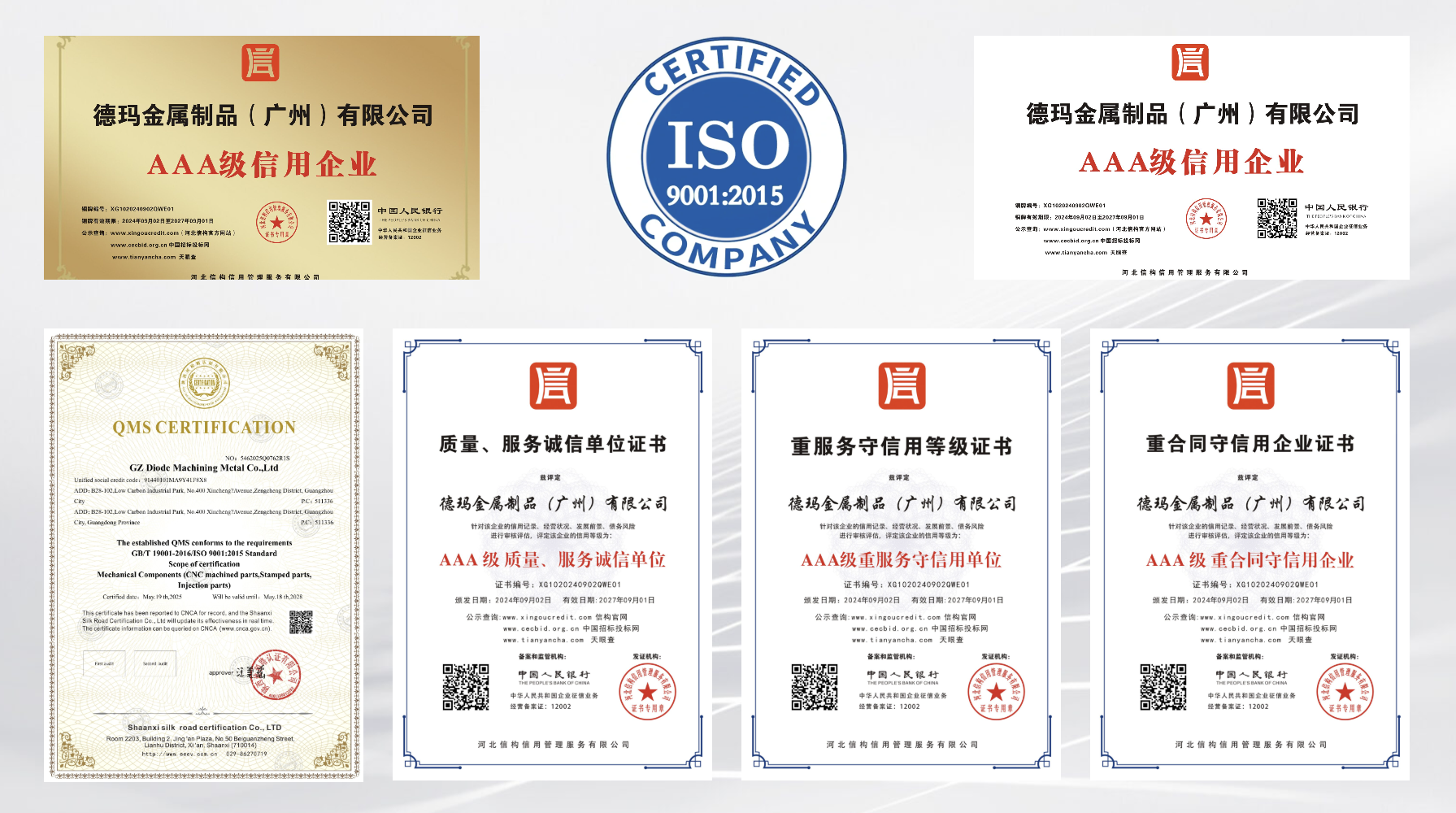
(YorkPedia Editorial):- Guangzhou, Guangdong May 7, 2026 (Issuewire.com) – In the high-stakes world of precision engineering, a single micron can be the difference between a groundbreaking technological success and a catastrophic mechanical failure. Imagine a scenario where a specialized aerospace component is integrated into a propulsion system, only for the assembly to fail during final testing because a critical internal bore was out of tolerance by a fraction of a millimeter. This lack of consistency not only leads to wasted material and ballooning costs but also shatters the trust between a manufacturer and its global partners. To prevent such vulnerabilities, implementing a robust CNC Machining Quality Control Solution is no longer optional; it is the fundamental pillar of modern industrial reliability.
The Standard of Excellence: Understanding ISO 9001-2015 in CNC Manufacturing
Quality control is often viewed as a final gatekeeper, but within a professional manufacturing environment, it begins long before the first spindle turns. ISO 9001-2015 is an international standard that specifies requirements for a quality management system (QMS). For a precision provider like Diode Machining, this certification serves as a blueprint for operational consistency. It ensures that every process–from the initial purchasing of raw materials to the final packaging of finished parts–is documented, monitored, and continuously improved.
The true value of ISO 9001 in CNC machining lies in its ability to mitigate the “Sample Paradox”–a common industry pain point where a part physically matches a client’s provided sample but fails to function in its final application. A frequent example occurs with non-metallic materials like EPDM; two parts may share identical dimensions, but a subtle variation in the foaming ratio or shore hardness can radically compromise sealing performance. Under an ISO-certified framework, we move beyond simple “visual replication.” We conduct a technical deep dive into the material’s structural DNA and specific gravity, ensuring that the mass-produced reality matches the functional requirements of the original design.
By leveraging over 15 years of production experience, this systematic approach allows for seamless transitions between small-batch prototyping and large-scale mass production. It provides a common language of quality that resonates across the 30 countries where these precision components are exported, ensuring that a part delivered to Europe meets the exact same high-performance criteria as one shipped to the United States or Australia.
The Precision Sentinel: The Role of CMM Inspection in Quality Assurance
While ISO 9001 provides the management framework, Coordinate Measuring Machines (CMM) provide the physical verification required for complex geometries. A CMM is a device used in manufacturing and assembly processes to test a part or assembly against the design intent. By precisely recording the X, Y, and Z coordinates of a target, the machine creates a digital map of the physical object, which can then be compared to the original CAD model.
CMM inspection matters for quality control because it removes the subjectivity of manual measurement. Traditional tools like calipers or micrometers are limited by the operator’s skill and cannot easily measure complex features such as true position, cylindricity, or sophisticated surface profiles. In contrast, CMM technology ensures that even the most intricate custom mechanical designs are verified with absolute certainty. This is particularly vital when dealing with materials such as 304 stainless steel, high-grade aluminum, or specialized engineering plastics, where thermal expansion or material hardness can affect machining stability.
How CMM Inspection Processes Secure Component Integrity
The CMM inspection process is a multi-stage workflow designed to catch discrepancies before they reach the assembly line. Here is how professional inspection cycles function to maintain high-level output:
- Automated Data Acquisition: The process begins by mounting the machined part onto the CMM table. Using either touch-trigger probes or optical scanning sensors, the machine follows a pre-programmed path to contact key points on the part’s surface. This automation is essential for high-volume orders, ensuring that every piece in a batch of thousands adheres to the same strict dimensional requirements.
- Comparison with Digital Twins: Once the points are collected, the software generates a comprehensive report. This data is overlaid with the client’s original 3D design. Any deviation–even those invisible to the naked eye–is highlighted. This allows engineers at Diode Machining to conduct project feasibility analyses and production cost optimizations based on real-world data, identifying if a specific machining strategy needs adjustment to improve yield.
- Environmental Stabilization: Accuracy is highly sensitive to temperature. Professional CMM inspections are conducted in climate-controlled environments to ensure that the material’s dimensions are stable. This level of detail is why advanced facilities equipped with 3-axis, 4-axis, and 5-axis CNC machines can maintain tolerances within the range of +/- 0.005 mm, providing the reliability required for medical, automotive, and industrial hardware sectors.
Technical Innovation and Core Competitiveness in Machining
The synergy between advanced machinery and rigorous inspection protocols defines the modern competitive edge. A facility boasting over 6,000 square feet of manufacturing space and more than 50 sets of CNC machines requires more than just hardware; it requires an extensive supplier network and an experienced engineering team. By strategically locating operations in a precision machining hub, manufacturers gain access to a diverse range of value-added services, including specialized surface treatments like PVD coating and complex assembly.
The technical prowess of a leading provider is often seen in the diversity of its material capabilities. Whether machining lightweight aluminum alloys for aerospace or durable stainless steel for catering equipment, the ability to optimize production costs through “similar case data” is a significant advantage. This data-driven approach allows for better material selection and more efficient tool paths, which directly translates to competitive pricing and full order capacity support for the client.
Furthermore, the capability to handle 5-axis CNC machining allows for the creation of organic shapes and undercut features in a single setup. This reduces the margin of error that typically occurs when moving a part between multiple machines. When this technical capability is paired with CMM verification, the result is a “seamless solution” where the prototype perfectly mirrors the final mass-produced product.
Conclusion: Building Trust Through Verified Precision
In the global marketplace, quality is the primary currency. The combination of ISO 9001-2015 certification and meticulous CMM inspection creates a transparent and reliable manufacturing ecosystem. It allows clients to focus on their core business, knowing that their mechanical designs are being brought to life by a partner that prioritizes technical accuracy over marketing fluff.
As manufacturing continues to evolve toward higher levels of automation and complexity, the reliance on verified quality control solutions will only grow. For companies looking to expand their capabilities in product development and international trade, choosing a partner that understands the deep relationship between certification and inspection is the most effective strategy for long-term success.
To learn more about precision manufacturing and quality standards, visit: https://diodemachining.com/

This article was originally published by IssueWire. Read the original article here.
