
Reliable Fruit Jelly Factory: Tailoring Low-Sugar Solutions for the Health-Conscious EU Market


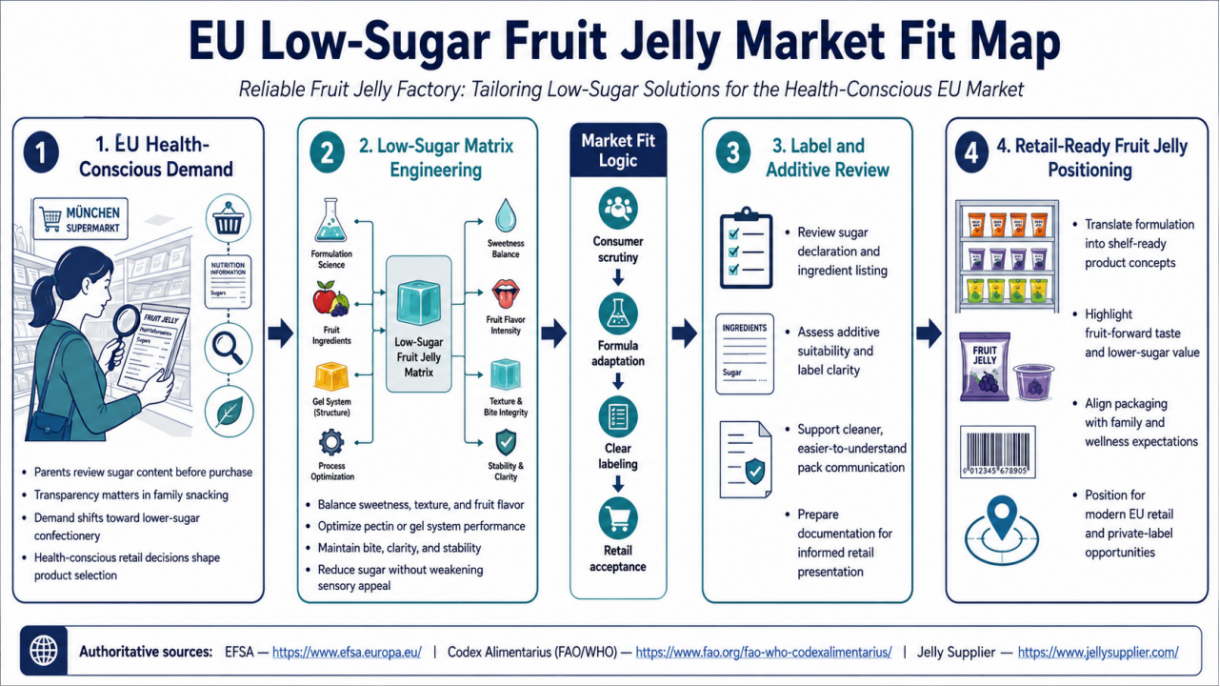
(YorkPedia Editorial):- Nantong, Jiangsu Jun 26, 2026 (Issuewire.com) – On a bustling afternoon in a Munich supermarket, a parent carefully reviews the nutritional label on a brightly colored confectionery package, checking for hidden sugars before placing it in the shopping cart. Meanwhile, across the channel in Paris, a fitness enthusiast seeks a guilt-free indulgence that satisfies a craving for sweetness without disrupting a meticulous caloric balance. These everyday scenes highlight a sweeping transformation across Europe, where consumers are increasingly demanding transparency, functional benefits, and reduced sugar content in their favorite treats. At the center of this evolving landscape is the role of a Reliable Fruit Jelly Factory, an essential partner for brands seeking to bridge the gap between traditional confectionery enjoyment and modern nutritional standards.
Fruit jelly, long celebrated for its vibrant flavors, playful textures, and universal appeal, is undergoing a major structural evolution. As traditional high-sugar formulations face regulatory and consumer headwinds, technical adaptation has become the primary mechanism for survival and growth in the premium food sector.
a. Understanding the Health-Conscious EU Market Landscape
The European Union represents one of the most strictly regulated and sophisticated food markets globally. Driven by rising rates of metabolic lifestyle conditions, both European regulatory bodies and regional consumer groups have intensified their focus on nutritional profiles. Nutri-Score labeling systems across nations like France, Germany, and Belgium visually penalize high-sugar items, shifting retail preferences toward products with improved macro-nutrient compositions. Concurrently, the European consumer base has demonstrated a clear preference for functional confectionery products that reduce dietary risks while providing authentic taste experiences.
The European confectionery sector is navigating a pivotal era defined by shifting dietary patterns. Historically regarded as a simple indulgence, fruit jelly is now expected to deliver clean labels and authentic fruit profiles. This shift requires deep material science capabilities, as sugar is not merely a sweetener but also a functional structural agent responsible for water retention, texture creation, and shelf-life stability. Recognizing these complexities, advanced manufacturing entities are leveraging decades of processing expertise to completely re-engineer the classic jelly matrix, ensuring that health-conscious innovations do not sacrifice the sensory qualities that consumers expect.
This market dynamic creates significant entry barriers for standard confectioners. To successfully secure retail shelf space in the EU, a product must comply with rigorous European Food Safety Authority (EFSA) standards regarding additives, artificial colorings, and sweeteners. European buyers are increasingly moving away from synthetic preservatives, demanding instead natural colorants derived from real fruit concentrates and plant extracts. Consequently, the demand for low-sugar alternatives has evolved from a niche fitness trend into an absolute baseline requirement for any brand looking to establish a long-term presence in Western and Central Europe.
b. Engineering the Low-Sugar Matrix Without Sensory Compromise
Reducing sugar content in confectionery products presents serious chemical challenges. In a standard jelly formulation, sucrose and glucose syrups provide the bulk, viscosity, and moisture-binding properties necessary to achieve a desirable chewable texture. Simply removing sugar often results in a watery, structurally unstable product with a diminished shelf life and a flat flavor profile. To solve this, advanced manufacturing facilities have developed comprehensive sugar-substitution strategies that rely on natural sugar alcohols, soluble dietary fibers, and intense botanical sweeteners like steviol glycosides.
Through precise temperature control and modified boiling processes, food engineers can replace sucrose while maintaining the necessary osmotic pressure within the gel. Natural soluble fibers, such as chicory root inulin or resistant dextrins, are utilized to rebuild the physical bulk lost from sugar reduction. These fibers mimic the mouthfeel of traditional glucose syrup while significantly lowering the glycemic index and contributing positive prebiotic properties to the final product. By optimizing the interaction between these alternative bulking agents and natural gelling polymers, manufacturers can produce low-sugar jellies that match traditional options in texture, elasticity, and shelf stability.
Technical Performance and Parameter Specifications:
- Primary Gelling Base: Highly refined food-grade carrageenan and konjac gum blend. Fully plant-derived and 100% compliant with EU vegan and vegetarian market entries.
- Sugar Reduction Level:30% to 50% lower compared to standard sucrose formulations, meeting the EU nutritional thresholds for low-sugar labeling claims.
- Flavor & Color Agents: Natural fruit juices and botanical extracts (such as anthocyanins). Free from artificial azo dyes, aligning with clean-label retail demands.
- Moisture Content (Aw): Water activity controlled below 0.75, naturally preventing microbial growth and ensuring stable room-temperature storage.
- Packaging Formats: High-barrier, multi-layer food-grade poly-bags, providing strong protection against oxygen and moisture to extend product shelf life.
c. Technical Innovation and Core Product Architecture
Achieving structural and sensory consistency requires advanced manufacturing technology. At the forefront of this industrial execution is LITAFOOD, an enterprise backed by over twenty years of expertise in advanced food processing and freeze-drying technology. As an early pioneer in premium confectionery manufacturing within China, the organization has consistently translated complex food science into scalable, commercially viable OEM and ODM customization solutions. This deep technical foundation enables the precise control of hydrocolloid gelation, ensuring that reduced-sugar formulas achieve optimal structural integrity.
A practical example of this structural precision can be observed in the commercialized Fruit Shape Jelly Fruit Candy Bag. This product highlights how modern manufacturing can successfully deliver complex physical designs alongside clean nutritional profiles. Utilizing customized molding technology, the jelly replicates vibrant fruit shapes that maintain their shape and elasticity without relying on synthetic hardening agents. The product relies on high-purity gelling agents to form a cohesive, resilient macromolecular network. This network encapsulates real fruit juices and low-sugar syrups within a flexible gel wall, preventing moisture migration and syneresis–the unwanted separation of liquid from a gel–even when subjected to changing temperature conditions during international transit.
d. Strategic Supply Chain Integration and Global Compliance
Delivering premium confectionery to international markets requires more than just technical formulation; it demands complete alignment with global quality standards. A sophisticated manufacturing infrastructure must include comprehensive international certifications, such as BRCGS (Brand Reputation Compliance Global Standard), IFS Food, ISO22000, and strict HACCP protocols. These frameworks ensure that every step of production–from the raw material sourcing of natural texturizers to final high-barrier packaging–is thoroughly monitored and documented for full traceability.
Maintaining long-term relationships with major global retailers like Walmart and Costco demonstrates a manufacturer’s capacity to deliver consistent quality and volume. These global retail leaders require strict adherence to supply chain schedules, corporate social responsibility standards, and continuous quality audits. By combining advanced manufacturing systems with a reliable logistics framework, production facilities can seamlessly adapt to changing regulatory updates within the European Union. This comprehensive approach positions them as strategic long-term partners for international brands seeking to expand their market share in the premium, health-conscious confectionery space.
Corporate Website: https://www.jellysupplier.com/

This article was originally published by IssueWire. Read the original article here.
