
High Quality Jerrycan Blow Molding Machine Factory vs Standard Systems: TONVA’s Heavy Packaging for the Middle East


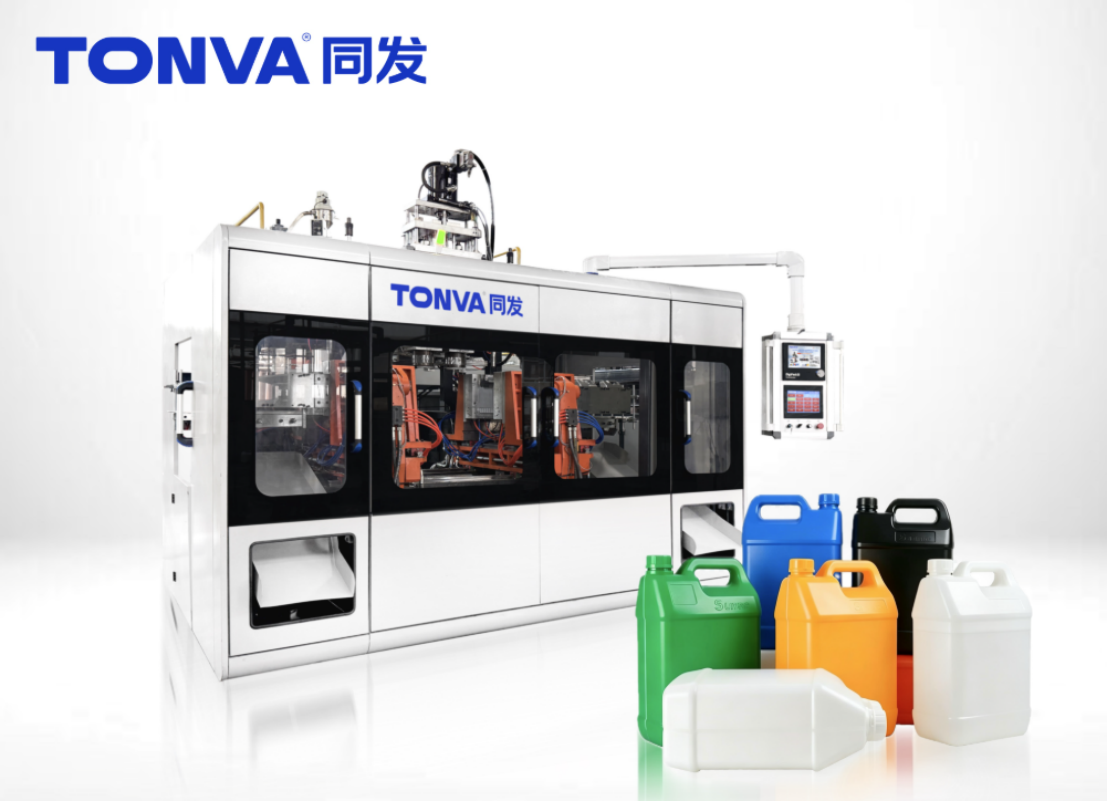
(YorkPedia Editorial):- Taizhou City, Zhejiang Aug 7, 2026 (Issuewire.com) – The growing industrial landscape of the Middle East, driven by extensive petrochemical production, agricultural developments, and bulk liquid logistics, has created a substantial demand for robust and highly reliable containment solutions. In harsh environmental conditions where temperatures fluctuate dramatically, standard plastic packaging often fails to maintain structural integrity, leading to leaks, contamination, and costly logistical failures. Consequently, regional manufacturers are shifting their focus from low-cost, basic containers to advanced heavy packaging solutions capable of withstanding physical stress and chemical degradation. At the center of this transition is the necessity for high-performance production equipment. Acquiring machinery from a High Quality Jerrycan Blow Molding Machine Factory has become a fundamental strategic decision for regional suppliers looking to produce heavy-duty containers, such as industrial jerrycans ranging from 10 to 50 liters. Unlike lightweight consumer bottles, industrial jerrycans require specialized blow molding systems designed to handle highly viscous resins, manage complex multi-layer parison distribution, and ensure uniform wall thickness, particularly around critical structural points like handles and corners.
I. Harsh Environments and Chemical Security: The Strategic Plastic Jerrycan Demand in the Middle East
The Middle East represents one of the most demanding markets for heavy-duty plastic packaging in the world. The regional economy relies heavily on the safe transport of oils, lubricants, industrial chemicals, and agricultural inputs across vast, arid territories. Under these conditions, plastic jerrycans serve as the primary containment vehicle for bulk liquids. However, the performance requirements for these containers are exceptionally high.
First, the extreme ambient temperatures of the region, which frequently exceed 45 degrees Celsius, can compromise the physical properties of high-density polyethylene (HDPE). Under prolonged thermal exposure, low-grade plastic containers are prone to environmental stress cracking (ESC) and deformation. Second, the chemical nature of the transported liquids–ranging from volatile organic compounds to concentrated fertilizers–demands absolute barrier integrity to prevent permeation and degradation.
Standard, single-layer containers often fail to meet these rigorous demands. Consequently, there is an escalating demand for multi-layer, stackable jerrycans that feature anti-permeation barrier layers, reinforced structural ribs, and uniform weight distribution. Producing these high-performance containers requires advanced blow molding machinery capable of maintaining tight control over material distribution and polymer crystallization during the manufacturing process.
II. High-Quality Jerrycan Blow Molding Machine Factory vs Standard Systems: Architectural Discrepancies
When selecting blow molding machinery for heavy packaging, industrial manufacturers face a critical choice between specialized, high-quality factories and standard, generic assembly systems. The differences between these two tiers of machinery are fundamental, affecting everything from structural reliability to long-term operational efficiency.
- Extrusion and Die Head Design: Standard blow molding machines typically utilize basic continuous extrusion systems. While suitable for small, lightweight consumer bottles, continuous extrusion systems struggle with larger heavy-duty containers. High-quality factories design specialized accumulator die heads for large-capacity jerrycans. An accumulator die head stores the molten polymer and extrudes it rapidly in a single, cohesive parison. This prevents parison sag–a common defect in standard systems where gravity stretches the molten plastic, causing the top of the container to be thin and weak while the bottom is excessively thick.
- Parison Wall Thickness Control: Standard systems often rely on basic 30-point or 50-point parison thickness programming, or sometimes simple mechanical adjustments. In contrast, a high-quality jerrycan blow molding system integrates advanced 100-point parison controllers (such as Moog systems). This level of precision allows the machine to adjust the die gap continuously as the parison is extruded, ensuring that complex geometry–such as the handle, neck, and bottom corners of a jerrycan–receives the exact amount of material required for optimal drop strength and load-bearing capacity.
- Clamping System and Platen Rigidity: Standard machines frequently employ basic hydraulic clamping with standard tie-bar configurations, which can suffer from platen deflection under high clamping pressures. High-quality systems utilize robust, optimized clamping mechanisms (such as two-plate or three-plate tie-barless or optimized tie-rod designs) guided by precision linear rails. This ensures uniform clamping force across the entire mold surface, eliminating flash, ensuring clean deflashing, and preventing premature mold wear.
- Energy Efficiency and Drive Systems: Standard machines often run on traditional hydraulic pumps that operate at constant speeds, wasting significant energy during idle phases of the cycle. Advanced manufacturers equip their systems with high-efficiency servo-drive or hybrid systems. By using servo-driven motors for clamping and carriage movements, energy consumption can be reduced by 30% to 50%, while positioning accuracy is improved to within fractions of a millimeter.
III. TONVA’s Technical Blueprint: Engineered for High-Strength Heavy Packaging
Meeting the rigorous operational requirements of the Middle Eastern market requires deep industry expertise and robust manufacturing capabilities. Zhejiang TONVA Plastics Machine Co., Ltd. (commonly known as TONVA), established in 1993, has spent over three decades perfecting blow molding technology. Operating from a modern building area exceeding 80,000 square meters, the company houses a dedicated team of experts with more than 30 years of experience in the blow molding industry.
As a certified high-tech enterprise holding ISO9001:2016, CE, and SGS certifications, TONVA has delivered more than 5,000 machine sets to over 120 countries. The enterprise places technological research and development at the core of its operations, maintaining 61 national patents. TONVA’s machinery range spans from 1 ml to 50 liters for continuous extrusion, and up to larger capacities for accumulator models, supporting configurations from single-layer to six-layer co-extrusion.
For the heavy packaging sector in the Middle East, TONVA’s systems utilize advanced accumulator die heads engineered to handle high-molecular-weight HDPE resins. The internal flow channels of the die heads are precision-machined to ensure smooth, low-shear material flow, which prevents polymer degradation and supports rapid color changes. Additionally, TONVA integrates high-precision 100-point parison programming to guarantee that every jerrycan produced features a balanced wall thickness, ensuring superior drop-impact resistance and high stackability under vertical loads.
IV. Strategic Case Analysis: Multi-Layer Blow Molding Technology in Action
To understand the practical application of high-quality machinery, one can examine advanced multi-layer container systems, such as those featured in specialized industrial container projects (for reference, see TONVA’s specialized mold and extrusion technical cases on their official Product Specifications).
In heavy chemical and oil transport, single-layer HDPE containers may experience chemical permeation over time. To address this, high-quality factories implement multi-layer co-extrusion technology (typically 3-layer to 6-layer configurations).
- Outer Layer: Formulated with high-grade virgin HDPE mixed with UV stabilizers and color masterbatches to resist environmental degradation and sunlight exposure.
- Middle Layer: Can incorporate recycled post-consumer resin (PCR) or regrind material to reduce manufacturing costs without compromising the container’s structural integrity, promoting circular economy principles.
- Barrier Layer (Inner/Intermediate): Made of materials like ethylene vinyl alcohol (EVOH) or polyamide (Nylon) to prevent the migration of hydrocarbons, oxygen, and volatile organic compounds.
TONVA’s multi-layer blow molding machines are equipped with independent extruders for each layer, synchronized via a centralized control system. The precision die head ensures that the barrier layer is distributed uniformly throughout the entire container body, with no thin spots or discontinuities. This technology allows Middle Eastern chemical exporters to ship products globally with complete confidence in regulatory compliance and chemical safety.
V. Sustainable Infrastructure and Global Standards for B2B Supply Chains
As global supply chains place greater emphasis on environmental sustainability, B2B buyers in the Middle East are aligning their procurement strategies with energy-efficient and low-waste manufacturing processes. Standard blow molding systems often generate substantial flash (waste material) and consume high levels of electricity, increasing both carbon footprints and operational costs.
High-quality factories address these challenges by integrating fully automated downstream auxiliary systems. Modern jerrycan blow molding machines feature automatic deflashing mechanisms that cleanly trim flash from the handle and bottom of the container. These waste materials are immediately routed to an inline granulator to be re-ground and fed back into the middle layer of the extrusion process, achieving a virtually zero-waste production cycle.
Furthermore, by utilizing advanced hybrid and full-electric drive options, manufacturers can significantly lower their energy consumption per container. The integration of remote diagnostic modules also allows engineers to perform real-time troubleshooting and parameter optimization across borders, minimizing downtime and ensuring continuous production.
For more information regarding advanced blow molding technologies and heavy packaging systems, please visit the official company website: Zhejiang TONVA Plastics Machine Co., Ltd.
This article was originally published by IssueWire. Read the original article here.
