
How to Reduce CNC Machining Costs: 10 Proven Ways for Prototyping and Production


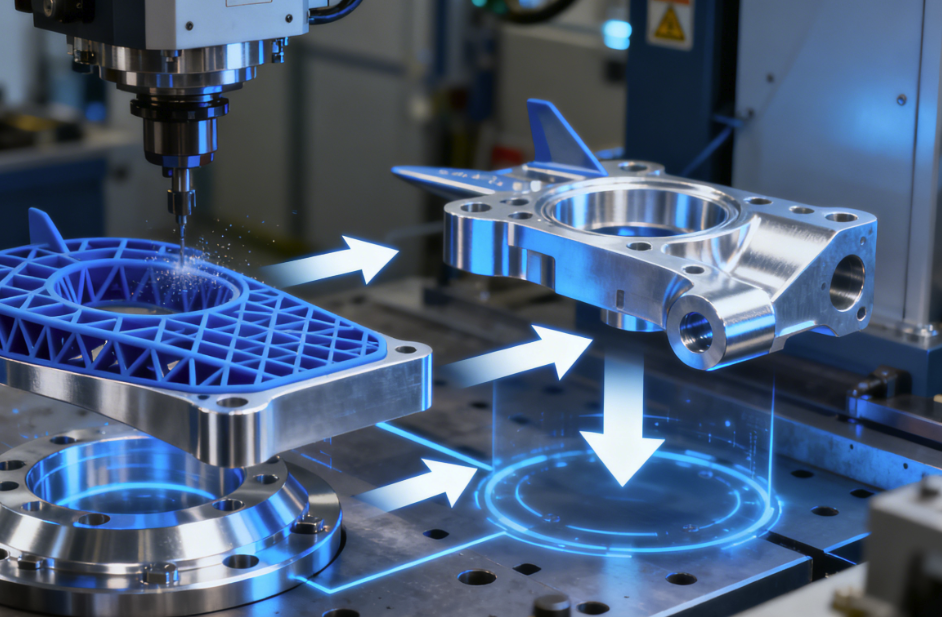
(YorkPedia Editorial):- Guangzhou, Guangdong May 6, 2026 (Issuewire.com) – The global manufacturing landscape is currently witnessing a significant shift toward localized high-precision production, driven by the increasing demand for rapid iteration in tech-driven industries. As companies race to bring innovative hardware to market, the role of a Low-cost CNC Prototyping Factory has become pivotal in balancing R&D speed with budgetary constraints. Navigating the complexities of CNC (Computer Numerical Control) machining requires a strategic approach that merges engineering ingenuity with efficient supply chain management. By optimizing design and manufacturing protocols, businesses can achieve substantial cost reductions without compromising the structural integrity or functional precision of their components.
1. Optimize Material Selection for Performance and Value
One of the most immediate ways to control expenses is through strategic material selection. While high-performance alloys like Titanium or Inconel offer exceptional properties, they are often difficult to machine and carry high raw material costs. For many industrial applications, Aluminum 6061 or 7075 provides an ideal strength-to-weight ratio at a fraction of the cost. Professionals in the field often utilize comprehensive material databases to find alternatives that meet mechanical requirements while reducing tool wear. Choosing standard stock sizes also eliminates the need for expensive pre-machining processes, allowing for a more streamlined production flow from the outset.
2. Simplify Part Geometry to Reduce Machine Time
Complexity is a direct driver of cost in CNC machining. Features such as deep pockets, thin walls, and intricate internal lattices require specialized tooling and slower feed rates. To minimize expenses, engineers should aim for designs that can be executed with standard end mills. For instance, replacing sharp internal corners with radii allows the cutting tool to maintain a continuous path, reducing the risk of tool breakage and decreasing the overall cycle time. By adhering to Design for Manufacturing (DFM) principles, developers can ensure that their prototypes are not only functional but also economically viable for eventual mass production.
3. Minimize Setups Through Multi-Axis Machining
Every time a technician has to manually reposition a part, labor costs and the potential for alignment errors increase. Utilizing advanced equipment, such as 3-axis, 4-axis, and 5-axis CNC machines, allows for the machining of multiple faces in a single setup. This is particularly crucial for complex mechanical designs used in the aerospace or medical sectors. As a leading provider of professional CNC machining and custom mechanical design, Diode Machining leverages a fleet of over 50 sets of CNC machines to handle multi-faceted geometries efficiently. This high-capacity approach ensures that complex project analysis translates into a seamless transition from prototype to assembly.
4. Standardize Hole Sizes and Threading
Custom-sized holes and non-standard threads require specialized drills and taps, which add to the procurement lead time and tooling costs. By standardizing these elements, manufacturers can use off-the-shelf tools that are readily available in the workshop. Furthermore, limiting the depth of threaded holes to three times the diameter is a proven industry standard; beyond this depth, the risk of tap breakage increases significantly while providing diminishing returns in terms of fastening strength. Precision in these small details contributes to a more predictable and cost-effective manufacturing schedule.
5. Avoid Over-Specifying Tolerances
While high precision is a hallmark of CNC machining, specifying “tight” tolerances (e.g., ±0.01mm) where they are not functionally necessary leads to higher scrap rates and increased inspection time. Professional manufacturing partners often recommend a “functional tolerance” approach–applying high precision only to critical mating surfaces while using standard tolerances for aesthetic or non-functional areas. This balance ensures that the product meets ISO9001-2015 quality standards without incurring the “precision tax” associated with unnecessary technical rigidity.
6. Optimize Surface Finish Requirements
Applying a high-polish or specialized coating to every surface of a part is rarely necessary. “As-machined” finishes are often sufficient for internal components or structural brackets. When specialized finishes like anodizing, PVD coating, or bead blasting are required for corrosion resistance or aesthetics, it is more cost-effective to process parts in larger batches. By analyzing the end-use environment–whether it be commercial refrigeration or industrial automation–engineers can select surface treatments that provide the necessary protection at the lowest possible price point.
7. Leverage Regional Supply Chain Networks
The geographical location of a manufacturing facility plays a vital role in cost optimization. Being situated within a precision machining hub allows for lower logistics costs and faster access to raw materials and value-added services. This extensive supplier network enables manufacturers to offer project feasibility analysis and production cost optimization based on large amounts of similar case data. Such strategic positioning allows for competitive pricing while maintaining the ability to export products to over 30 countries worldwide, including major markets like the United States and Europe.
8. Transition Strategically from Prototyping to Production
The methods used for a one-off prototype are rarely the most efficient for mass production. During the prototyping phase, the focus is on speed and flexibility. However, as volumes increase, the focus shifts to cycle-time reduction and material yield. A partner with over 15 years of experience in production and operation management can provide the “full order capacity support” needed to scale. This involves refining the manufacturing process after the first successful prototype to ensure that the “bridge-to-production” phase is optimized for long-term financial performance.
9. Utilize Professional Assembly and Integration Services
Reducing the total cost of ownership often involves looking beyond the machined part itself. Choosing a partner that offers integrated assembly and manufacturing services can eliminate the need for multiple vendors. When a single team handles the analysis, machining, and final assembly of complex projects, the likelihood of integration issues decreases. This holistic approach ensures that each component fits perfectly within the larger mechanical system, reducing the labor hours required at the client’s facility and streamlining the overall supply chain.
10. Implement Rigorous Quality Control at the Source
Perhaps the most effective way to reduce costs is to eliminate errors before they occur. Implementing a robust quality control system based on ISO standards ensures that every part shipped meets the required specifications. By utilizing advanced machinery and an experienced engineering team, manufacturers can conduct project feasibility analyses early in the design phase. This proactive identification of potential manufacturing hurdles prevents costly redesigns and production delays, providing a reliable foundation for global precision manufacturing partnerships.
Partnering with Diode Machining for Cost-Efficient Production
Implementing these ten strategies requires more than just theoretical knowledge; it demands a manufacturing partner with the infrastructure and expertise to execute them. Diode Machining embodies these principles through over 15 years of operational excellence and a 6,000-square-foot facility equipped with 50+ sets of high-end CNC machinery. By combining ISO9001-2015 certified quality control with a deep understanding of material science and mechanical design, Diode Machining helps clients optimize production costs without sacrificing quality. Whether you are navigating early-stage project feasibility or moving into high-volume global distribution, our team provides the technical analysis and full-order capacity support needed to thrive in today’s competitive market.
To learn more about precision manufacturing solutions and cost optimization, visit: https://diodemachining.com/
This article was originally published by IssueWire. Read the original article here.
