
Solving Complex Projects via China High-Mix and Low-Volume PCB Assembly Production Factory: The Venture Electronics Way


(YorkPedia Editorial):- Shenzhen, Guangdong May 31, 2026 (Issuewire.com) – The Strategic Shift Toward High-Mix, Low-Volume Manufacturing
Are you facing the challenge of sourcing high-reliability circuit boards for a low-volume medical device? Do your industrial control systems require dozens of different PCB designs but only a handful of units for each? Is the transition from a rapid prototype to a small production run causing unexpected technical delays? In the modern electronics landscape, finding a China high-mix, low-volume PCB assembly production factory that balances precision with flexibility has become the primary hurdle for engineering-driven firms. Venture Electronics Tech Ltd. (Venture Electronics) addresses these complexities by integrating specialized engineering support with a manufacturing model designed specifically for fragmentation and high technical requirements.
Industrial automation, medical diagnostic equipment, and aerospace systems rarely require millions of identical units. Instead, these sectors demand “High-Mix, Low-Volume” (HMLV) production. Traditional manufacturing models focus on high-speed, single-product throughput to maximize profit through scale. However, this approach often fails when applied to complex industrial projects. Frequent line changeovers, diverse component sourcing, and the need for absolute process consistency make HMLV the ultimate test of a manufacturer’s operational maturity.
Venture Electronics functions as a systematic solution provider rather than a standard contract manufacturer. By focusing on projects where variety is high and volume is low, the facility bridges the gap between disorganized prototyping and rigid mass production. This specialization ensures that fragmented manufacturing needs receive the same level of rigorous quality control usually reserved for high-volume consumer electronics.
Agile Production Lines and Zero-MOQ Flexibility
The ability to switch between a hundred different board designs without losing momentum defines manufacturing agility. Many factories impose a Minimum Order Quantity (MOQ) to offset the costs of setting up a Surface Mount Technology (SMT) line. For small-batch industrial projects, these restrictions stifle innovation and increase unnecessary inventory costs.
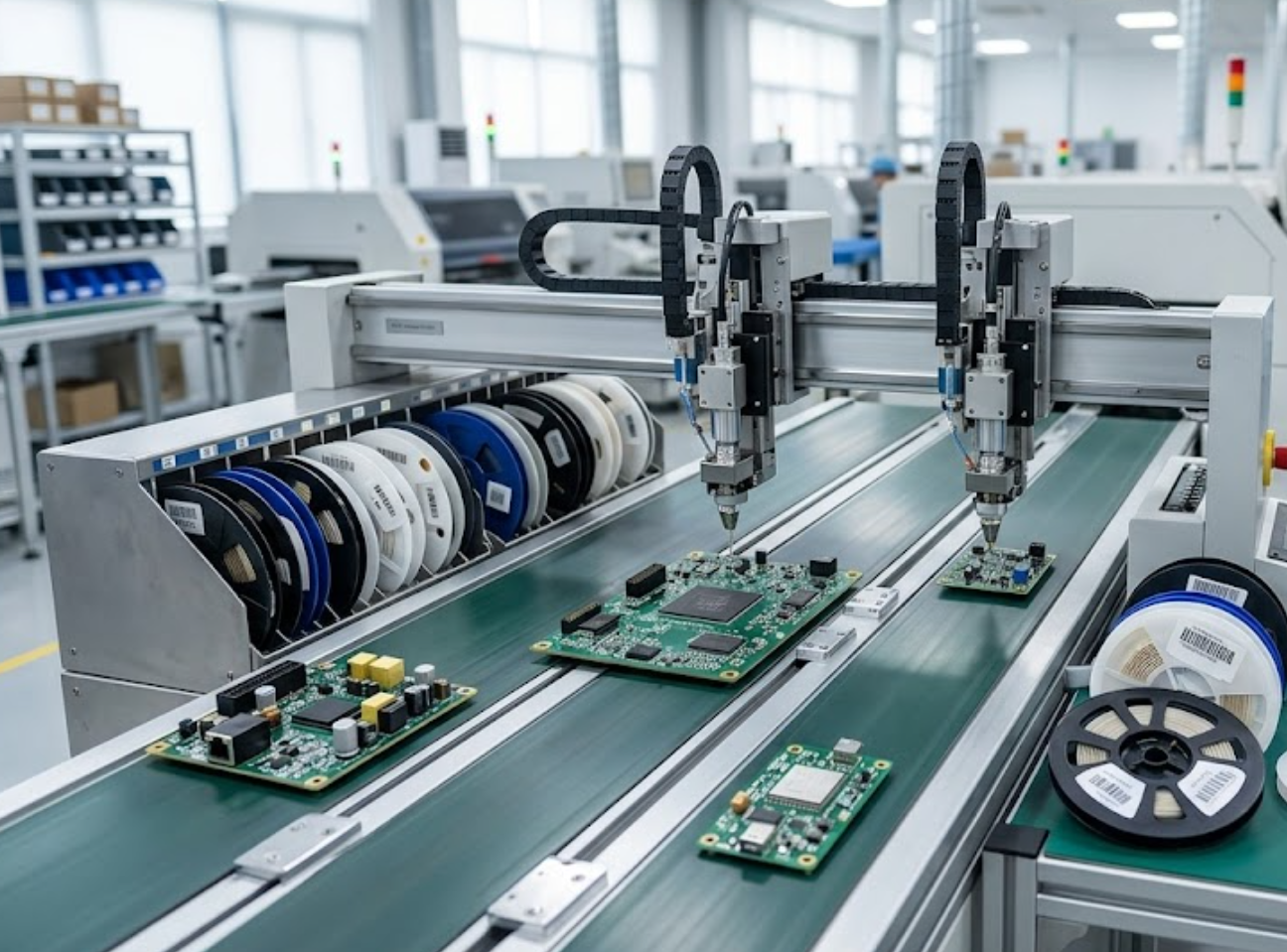
Operating four dedicated SMT lines, Venture Electronics utilizes programmatic management to handle the transition between diverse assemblies. Whether the order is for five units or five hundred, the production environment remains stable. This operational structure supports a seamless “No MOQ” policy. Furthermore, the facility maintains a 24-to-48-hour rapid assembly cycle for urgent samples. This speed allows design engineers to iterate quickly, compressing the development timeline for complex systems without sacrificing the integrity of the final assembly.
Locking in Reliability through Process Consistency
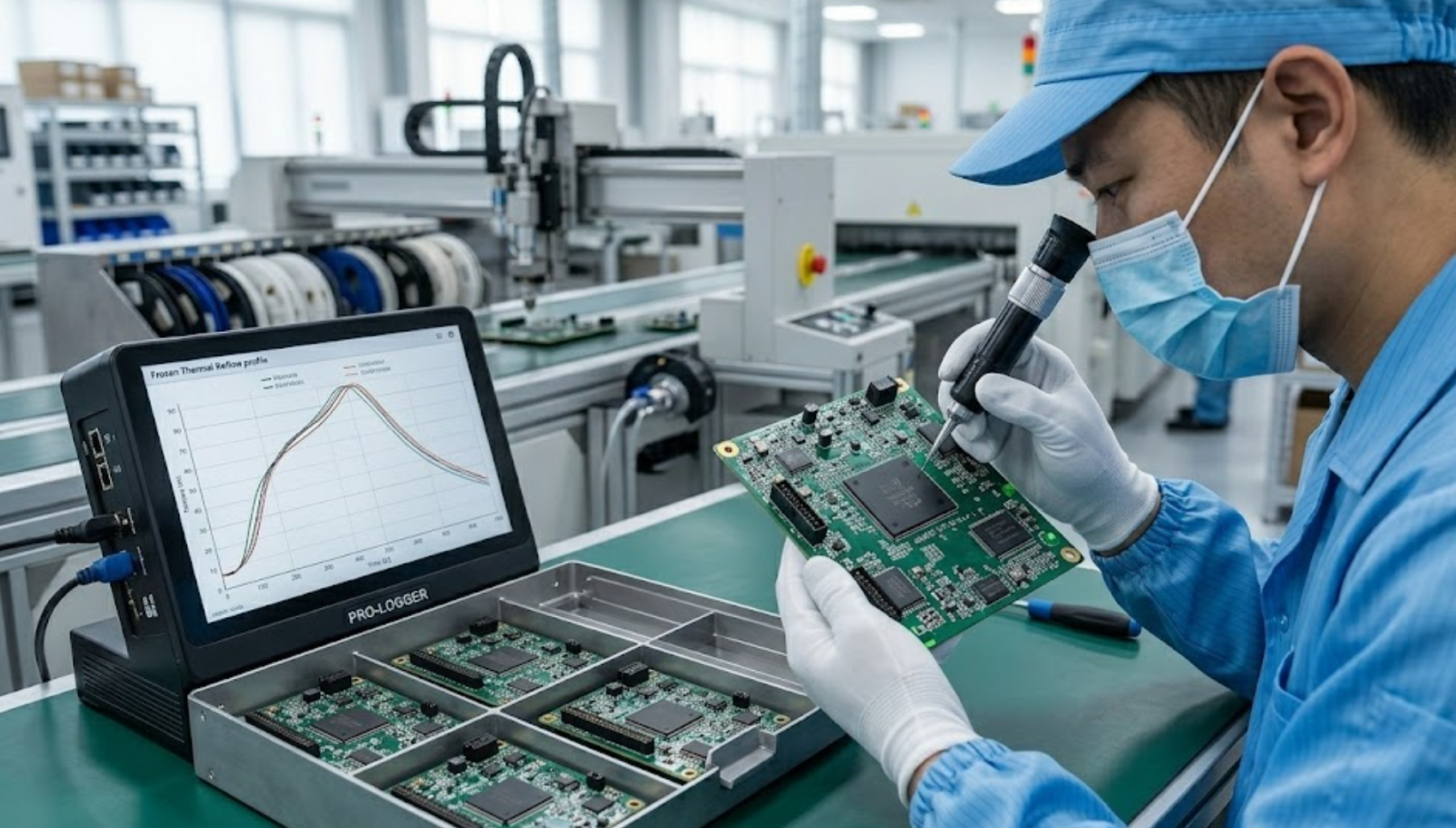
Low-frequency production often suffers from quality drift. When a batch is produced only once every six months, maintaining identical soldering conditions is difficult. Venture Electronics solves this through “process parameter reproducibility.” Every project receives an independent technical profile that includes specific reflow soldering temperature curves and placement data. These parameters remain frozen in the system, ensuring that a batch produced today is identical to one produced a year from now.
Reliability in industrial and defense-grade products depends on sophisticated hardware and strict standards. The use of nitrogen-filled reflow soldering reduces void rates in solder joints, while 100% X-ray inspection ensures the integrity of 0.35mm BGA components. For equipment operating in harsh environments, specialized services such as conformal coating and electronic potting are standard. These processes ensure compliance with IPC-A-610 Class 3 standards, which are essential for products subjected to extreme vibration or temperature fluctuations.
Solving the “Turnkey” Puzzle from Bare Boards to Box-Build
Managing multiple vendors for PCB fabrication, component sourcing, and mechanical housing often leads to fragmented responsibility. Interface mismatches or assembly errors frequently occur during the final integration phase. A “Turnkey” solution eliminates these risks by consolidating the entire lifecycle under one management system.
- Vertical Box-Build Integration:For complex projects like industrial PLCs or medical equipment, the process extends beyond the circuit board. It includes wire harness processing, precision enclosure assembly, and full functional testing. Delivering a finished, ready-to-use product reduces the logistics burden on the client and ensures mechanical parts fit electronic components perfectly.
- Centralized Component Sourcing:Leveraging a broad regional network allows for efficient procurement of all electronic components. This centralized approach mitigates the risks of counterfeit parts and prevents production delays caused by missing individual elements in a high-mix bill of materials.
- Seamless NPI Transition:The New Product Introduction (NPI) process remains within a single technical ecosystem. Moving from a three-piece prototype to a three-hundred-piece production run happens without changing facilities. This continuity avoids the cost and time of re-validating manufacturing processes when scaling up.
- Accountability and Quality Control:A single point of contact simplifies communication and clarifies responsibility. By overseeing everything from bare board fabrication to final calibration, the facility ensures that any technical discrepancy is identified and corrected long before the product reaches the end-user.
Navigating Compliance in Regulated Industries
Medical and aerospace sectors operate under strict regulatory oversight. Compliance requires more than just high-quality soldering; it requires a transparent and traceable supply chain. Following the principles of ISO 13485, the facility ensures that even small-batch orders have a complete material batch traceability chain. This documentation is vital for medical devices where every component must be accounted for in the event of a field inquiry.
High-reliability material selection further differentiates complex projects. The capability to handle non-standard requirements–such as Rogers high-frequency materials, heavy copper for power electronics, and High-Density Interconnect (HDI) structures–is standard. These technical capabilities prove that a factory can manage “non-standard” and “high-reliability” requirements simultaneously, which is a frequent necessity in aerospace applications.
Conclusion
The essence of the Venture Electronics model is the balance between manufacturing elasticity and technical precision. Modern innovation does not always require millions of units; it requires the ability to produce complex, high-mix projects with absolute reliability. By combining flexible production lines, frozen process parameters, and vertical turnkey integration, the factory provides a robust manufacturing foundation for the world’s most demanding industries. This approach ensures that technical complexity never becomes a barrier to market entry.
For more information on high-mix, low-volume PCB solutions, please visit: https://www.venture-mfg.com/
Media Contact
Venture Electronics Tech Ltd.
+86-0755-85296692
Building 36, Chentian Industrial Area Xixiang, Bao an District, Shenzhen, GuangDong, China
This article was originally published by IssueWire. Read the original article here.
