
Guide to Sourcing from a High Quality 3.6V Smart Meter Battery Factory for Global Utility Tenders


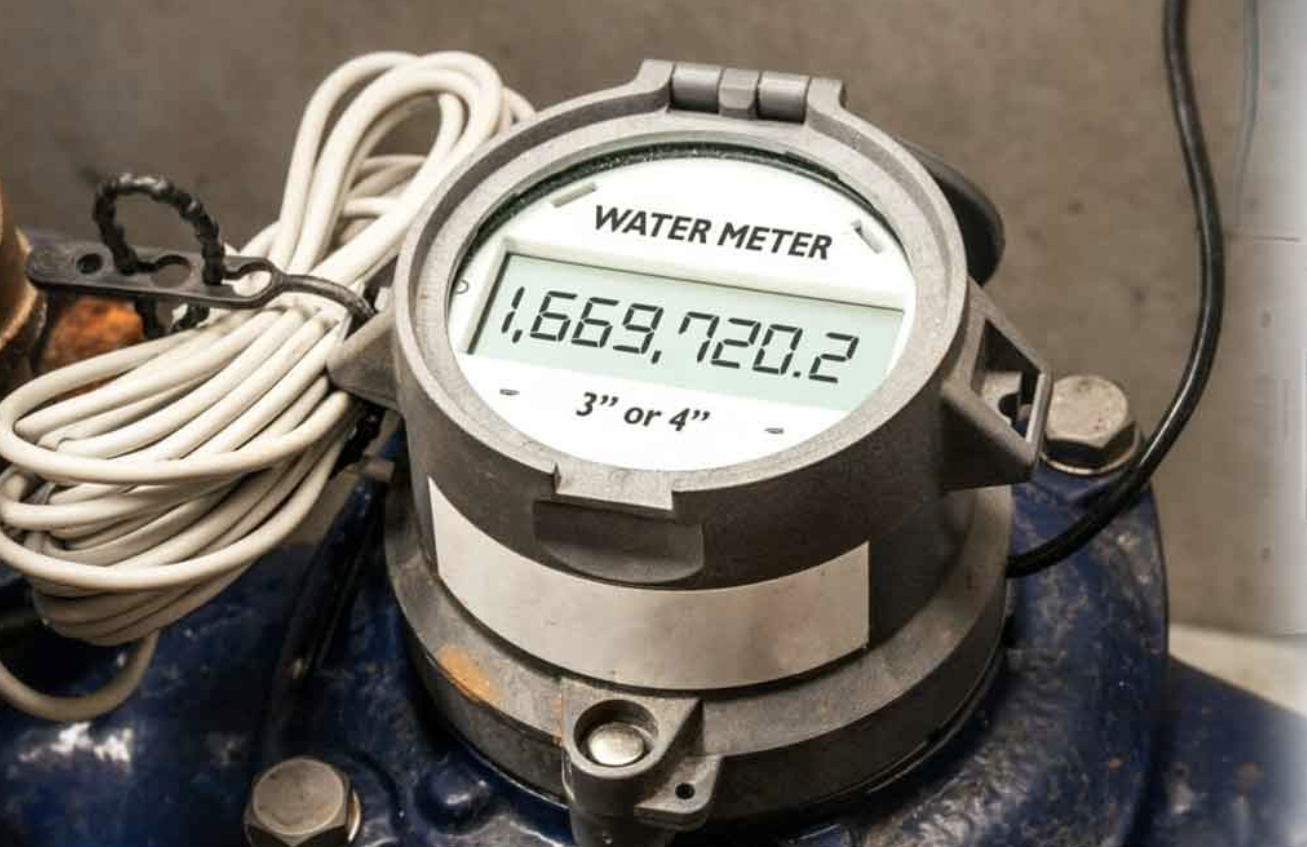
(YorkPedia Editorial):- Shenzhen, Guangdong Jun 25, 2026 (Issuewire.com) – Modernizing the world’s electricity, water, and gas networks puts unusual demands on the parts buried inside meter housings. Public utility tenders now routinely write ten- to fifteen-year service expectations into their contracts, and once a meter goes into a basement closet, an underground vault, or a utility pole bracket, nobody wants to revisit it. The cell powering the device, more than any other component, decides whether that promise actually holds. Bidding consortia know this, which is why their engineering reviewers spend disproportionate time on the battery line item. Picking the right High Quality 3.6V Smart Meter Battery Factory is less about finding a vendor and more about laying down the technical floor that the rest of the bid stands on.
A serious procurement framework digs past unit price into territory that data sheets rarely cover well — long-term electrochemical drift, behavior under repeated cold-soak and humidity, and the paperwork trail required for cross-border shipping. Anyone who has lived through a failed pilot project knows that saving fifty cents per cell can torpedo a five-year deployment. That hard-won lesson is why technical committees now look closely at where cells come from and who actually makes them. Building a working relationship with a manufacturer that has been through multiple tender cycles tends to pay back several times over, mostly by sparing the bidder from the kind of recall events that make local newspapers.
The Hidden Risk Inside Utility Tenders: Why Battery Lifespan Functions as a Financial Safeguard
Most international utility tenders contain performance clauses with sharp teeth. Premature field failure rarely earns sympathy; it earns penalties. When a smart water or gas meter stops reporting because its cell ran dry early, the contractor — not the utility — typically swallows the cost of dispatching a truck, sending a technician underground, and explaining the gap to the regulator. Add municipal fines on top of replacement logistics and the financial picture gets ugly quickly. Engineering groups with scar tissue from previous projects have learned to treat the internal power cell as a financial instrument rather than a parts-bin item.
Modern evaluation panels have grown skeptical of theoretical lifecycle math printed on a spec sheet. The numbers tend to look fine in a controlled lab and behave differently after eighteen months in a Romanian winter or a Saudi summer. So scoring criteria have shifted toward field validation history. Sourcing managers now ask for deployment records spanning multiple climate zones, and they read those records carefully. A cell that drifts under repeated thermal stress is the sort of problem that quietly erodes contract margins long before it becomes visible.
This is where PKCell’s deployment history offers something concrete. The company has shipped product into millions of grid endpoints across regions with very different operating conditions, and the resulting field data tells a fairly consistent story. Bidders putting that history into their technical submissions can show a utility executive something better than promises — they can show a low-risk profile backed by units already in the ground. In the final stretch of a competitive evaluation, that kind of evidence often shifts the scoring more than people expect.
Passing Stringent Technical Evaluation: How PKCell Aligns with Global Grid Standards
Smart grid specifications get specific fast. They want exact figures on voltage stability, pulse current capability, and capacity retention across realistic load patterns. Modern advanced metering infrastructure leans on LoRaWAN, NB-IoT, or GPRS to push data uplink, and each transmission burst pulls a current spike the cell has to deliver without flinching. Meters that pass technical evaluation use power sources matched to those electrochemical requirements — and the ones that fail evaluation almost always failed at this layer first.
3.6V C-size ER26500 lithium thionyl chloride battery sits in this category for a reason. Rated at 9000 mAh, it holds an unusually flat voltage profile across most of its discharge curve, which is exactly what an NB-IoT modem needs to avoid dropping packets late in service life. The annual self-discharge rate stays under one percent, so cells held in warehouse stock for a year before field installation arrive with their energy budget essentially intact. None of these numbers are exotic on their own, but maintaining them across millions of cells is harder than it looks.
Cell-level performance is only half the story. International tender packages reject suppliers whose paperwork doesn’t line up with cross-border requirements, and that rejection happens at the customs broker stage rather than the engineering desk. PKCell (Shenzhen Pkcell Battery Co., Ltd.) maintains the regulatory portfolio that keeps those shipments moving — ISO 9001 for quality system, IEC 60086-4 for primary battery safety, UL recognition, RoHS, REACH, and UN 38.3 for transport. None of these are optional in a serious tender, and missing even one tends to surface at exactly the wrong moment.
Eliminating Batch Variance: Where Automated Quality Control Earns Its Keep
A single hand-built prototype performing well in a lab proves almost nothing about a production run of two million units. The hard problem in this industry isn’t making one good cell — it’s making the millionth cell behave like the first one. Microscopic variations in electrode coating, slight differences in electrolyte fill volume, or inconsistencies in seal compression can scatter field performance just enough to turn a clean rollout into a maintenance nightmare. Procurement officers who have lived through that experience know to ask specific questions about how a factory keeps batch variance in check.
Shenzhen Pkcell Battery Co., Ltd. addresses this through fairly heavy investment in automated production lines that take human judgment out of the critical steps. Computerized monitoring tracks electrode coating thickness, electrolyte injection volume, and laser seal parameters in real time, with the system flagging out-of-spec units before they advance to the next station. The arrangement isn’t unique in the industry, but the discipline of running it consistently is.
The quality protocol layered on top of automation runs through several stages. Raw materials get screened on arrival rather than trusted on certificate. Open-circuit voltage gets tracked through formation and aging. High-temperature soak tests catch the kind of latent defects that wouldn’t show up in a five-minute electrical check. Finished cells pass through internal resistance and voltage stability screening, individually rather than by sample. The cumulative effect is that an OEM receiving a shipment can plan around the assumption that batch eight behaves like batch one — and in this market, that assumption is worth real money.
Strengthening a Technical Bid with PKCell’s Customized Engineering
Smart meters end up in places that off-the-shelf packaging never accounts for. Tight enclosure geometries, awkward mounting orientations, unusual connector requirements, and ambient conditions ranging from frost to direct sun — every utility tender seems to introduce a new wrinkle. Standard cells off a catalog page handle some of this, but the harder cases need engineering input from the cell manufacturer. That capability, when it exists, often becomes the deciding factor in technical scoring.
Lithium thionyl chloride chemistry comes with one well-known operational quirk: passivation. A thin chemical layer forms on the lithium surface during storage, which protects the cell long-term but causes a temporary voltage dip when a high-current pulse hits a previously dormant cell. For an NB-IoT meter waking up to transmit, that dip can mean a missed handshake. PKCell tackles this through anti-passivation chemistry combined with Hybrid Pulse Capacitor configurations, which buffer the initial transmission burst and let the cell recover smoothly. The result is a wake-up response sharp enough that the modem doesn’t notice the transition.
Mechanical integration tends to require similar flexibility. Engineering teams at PKCell work through custom termination designs — solder tabs in non-standard positions, axial wire leads at specified lengths, heavy-duty connectors matched to the meter manufacturer’s harness, and multi-cell pack arrangements built around specific PCB layouts. The advantage shows up in the tender response: instead of asking the utility to accept a generic component with mounting compromises, the bidder presents a power system designed against the meter’s actual constraints. That distinction reads clearly to evaluators who have seen too many bids try to hide standard parts behind clever language.
Conclusion
Winning a global utility tender takes the right combination of pricing discipline, technical alignment, and risk management — and the cell inside the meter sits at the intersection of all three. Choose the wrong supplier and the cost shows up later, in maintenance budgets, regulatory penalties, and lost reputation with the utility client. Choose a manufacturing partner with verified history, complete certifications, and real engineering capability, and the meter delivers on the fifteen-year promise written into the contract.
Shenzhen Pkcell Battery Co., Ltd. brings the combination of automated production discipline, certification breadth, and customization responsiveness that bidding groups need to clear technical evaluation and stay clear afterward. Aligning a supply chain with a manufacturer that has already navigated this terrain saves the kind of time and risk that simply doesn’t appear on a price comparison. Additional product specifications, certification records, and engineering customization details are available at https://www.pkcellpower.com/.
Media Contact
Shenzhen Pkcell Battery Co., Ltd.
902, Tower B, Hongrongyuan North Station Center, North Station Community, Minzhi Street, Longhua District, Shenzhen, China
This article was originally published by IssueWire. Read the original article here.
