
Top Rated Artificial Floral Arrangements In China: Premium Boho and Earthy Palette Designs for Destination Weddings


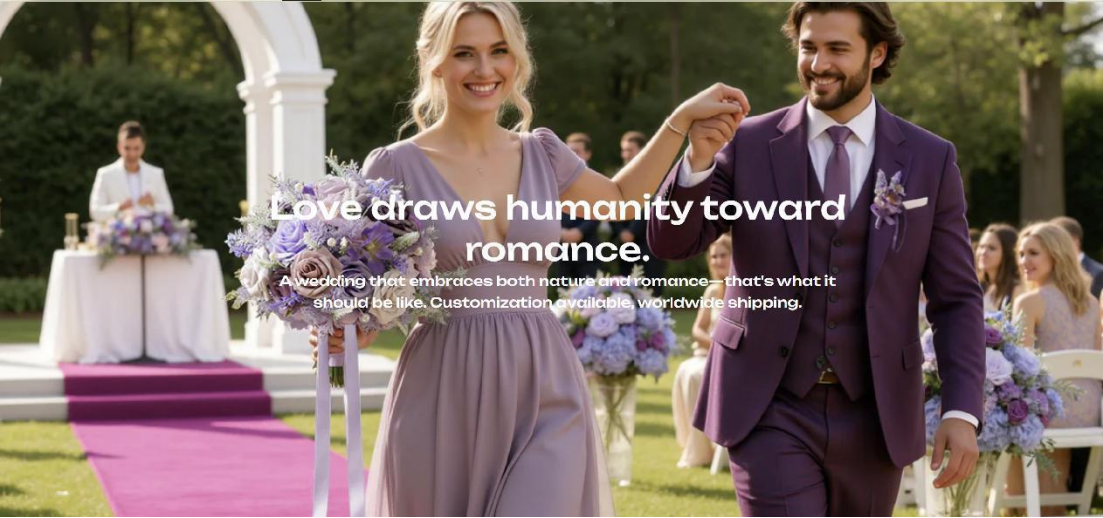
(YorkPedia Editorial):- Kaifeng, Henan Jun 24, 2026 (Issuewire.com) – Destination weddings–whether set against the sun-bleached cliffs of Santorini, the rugged tufa landscapes of Cappadocia, or the remote wilderness of the American Southwest–have moved away from rigid, traditional aesthetics. In their place, a highly sought-after design paradigm has emerged: the bohemian, earth-toned celebration. Achieving this look in remote or climate-challenged locales presents significant logistical hurdles for event designers. Fresh flora often succumbs to intense heat, arid winds, or transport delays, driving an unprecedented surge in demand for the Top Rated Artificial Floral Arrangements In China. Far from the rudimentary replicas of the past, contemporary premium artificial florals represent a marriage of high-performance materials science and botanical polymer engineering, offering an unyielding medium for international event designers to execute breathtaking installations globally.
The modern bohemian wedding aesthetic relies heavily on nuanced, desaturated color palettes–terracotta, muted ochre, pampas cream, dried desert sage, and rich sienna. These hues must look entirely organic, capturing the exact light-reflective and light-absorbent properties of living, desiccated, or preserved flora. Premium artificial arrangements achieve this through advanced textile coloration techniques, including multi-tonal gradient printing and micro-textured fabric coatings that eliminate artificial sheen. This ensures that whether captured under harsh midday equatorial sun or soft golden hour lighting, the floral installations retain a soft, photorealistic texture. For international destination weddings, where local floral markets may lack specific tonal varieties or where import regulations restrict organic materials, these high-tier simulated arrangements provide a predictable, flawless solution.
The Evolution of Sustainable Luxury in the Destination Wedding Sector
The macro-trends shaping international event design indicate a permanent shift toward sustainable luxury. Discerning couples and high-end event planners are increasingly scrutinizing the environmental and financial waste associated with single-use floral installations. Fresh flowers for massive structural installations require temperature-controlled international air freight, extensive chemical preservation, and massive water consumption, only to be discarded hours after the ceremony. This ecological footprint is amplified in destination weddings, where delicate stems are flown into remote islands or arid regions.
The adoption of commercial-grade simulated plants and flowers has consequently transitioned from a budget-driven alternative to a conscious choice for sustainable luxury. A single, masterfully engineered artificial installation can be packed, shipped, reused across multiple seasonal events, or retained as a permanent installation by venues. This reuse paradigm dramatically reduces the cost-per-event for hospitality groups and wedding planners while completely mitigating the risk of structural collapse due to petal wilt or stem breakage. Furthermore, advanced synthetic florals are hypoallergenic and free from organic debris, ensuring compliance with strict agricultural import inspections at international borders, a common point of failure for destination wedding logistics.
Product Architecture and Engineering: A Case Study in Botanical Replication
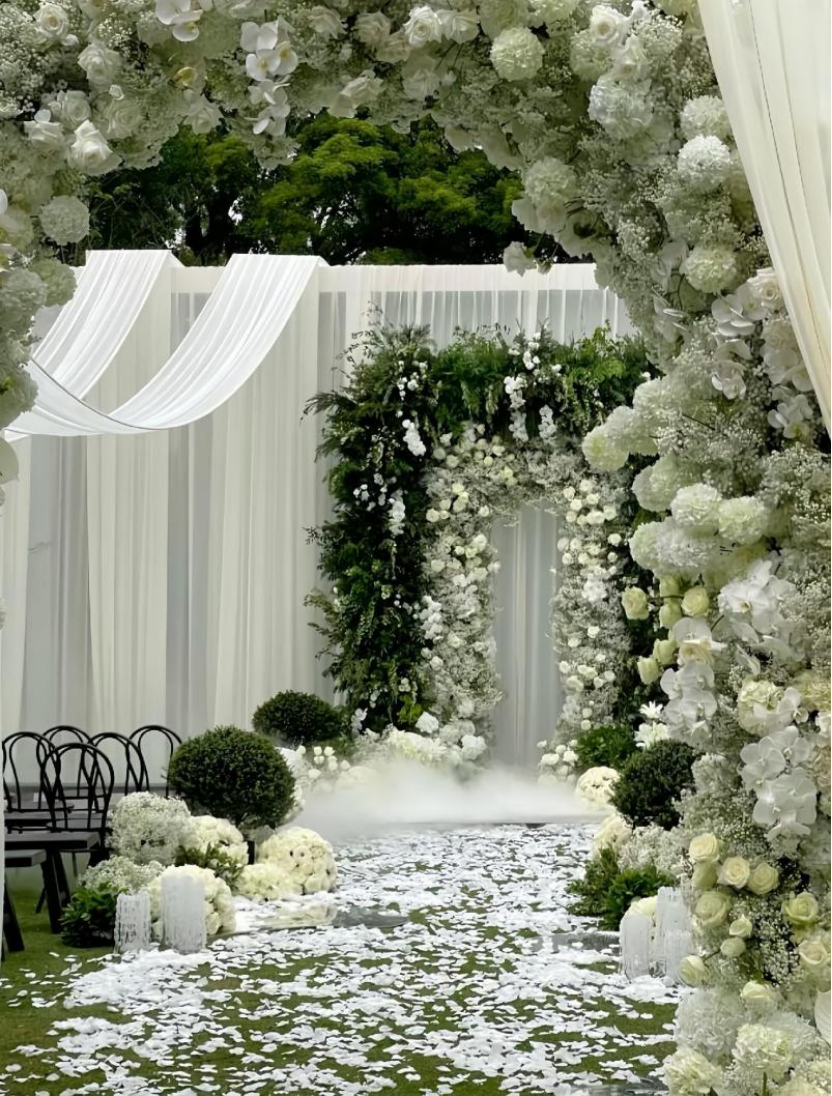
To understand the structural and aesthetic capabilities of modern high-tier synthetic floral design, one can examine the architectural framework of advanced outdoor installations, such as an elegant 8-foot Monet Garden-style floral wedding arch. This category of product demonstrates the complex interplay between aesthetic softness and structural rigidity required for high-stakes event environments.
From a structural engineering perspective, a premium 8-foot floral arch is built upon a modular, heavy-duty metal chassis that provides wind resistance and structural stability on diverse terrains, from sandy beaches to manicured lawns. The floral elements themselves are not merely attached but are systematically integrated into a multi-layered backing system. The base layer utilizes high-density polyethylene (HDPE) or specialized mesh backings that allow for secure anchoring while maintaining flexibility for transit.
The botanical elements leverage a combination of high-grade silk, polyurethane (PU), and real-touch polymers. Each petal and leaf undergoes precise thermal molding to replicate natural vein structures and directional curling. In bohemian and earthy designs, achieving the complex texture of dried palm fronds, eucalyptus leaves, and delicate pampas grass requires specific material variations:
- Pampas and Ornamental Grasses: Engineered using fine-gauge synthetic filaments that mimic the kinetic motion of natural grass in the wind without the shedding or fragmentation typical of real dried pampas.
- Boho Roses and Peonies: Constructed from variable-density polyester silk coated with a matte polymer film, preventing fraying at the edges and ensuring the deep, earthy tones do not fade under prolonged exposure to ultraviolet (UV) radiation.
- Structural Foliage: Utilizing UV-inhibited polymers that retain flexibility and color integrity, ensuring the greenery does not take on a plasticized appearance under flash photography or video recording.
According to technical specifications and industry standard practices, these arrangements are rated for both indoor and extended outdoor exposure. The integration of colorfast pigments directly into the liquid polymer matrix before extrusion ensures that the rich terracottas, warm sands, and deep rust tones remain stable even when exposed to high-UV coastal environments or unexpected precipitation.
Manufacturing Precision and Global Supply Chain Integration
The capacity to deliver highly customized, structurally sound floral arrangements for international markets requires an industrialized approach to design and manufacturing. Yongnuo has positioned itself at the forefront of this sector by bridging artisanal design with large-scale industrial capability. Operating from a 30,000-square-meter modern manufacturing facility equipped with 20 advanced production lines, the integration of scale allows for the standardization of quality control that is impossible to achieve in purely artisanal workshops.
The manufacturing process operates under a rigorous quality control framework designed to eliminate defects before products enter the global shipping pipeline. In international trade, product returns due to structural failure or color mismatch are cost-prohibitive for both the supplier and the buyer. By implementing systematic checks at every phase–from raw polymer testing to the final assembly of multi-floral panels–the incidence of defects is minimized. This structural reliability is vital for destination wedding planners who operate on compressed timelines and cannot afford to receive compromised inventory.
Furthermore, supply chain resilience is maintained through a robust raw material inventory strategy. This allows production lines to remain active regardless of seasonal fluctuations in global fabric or polymer markets, ensuring stable lead times. Whether fulfilling a bespoke order for a single high-end beach resort installation or mass-producing standardized components for global event hire companies, the manufacturing infrastructure guarantees a predictable output that aligns with strict international delivery schedules.
Operational Excellence and Global Event Logistics
Beyond the physical attributes of the floral products, the execution of international destination weddings requires an ecosystem of robust operational support. Global delivery networks must be backed by strategic warehousing and agile customer service frameworks to accommodate the dynamic nature of event planning.
Modern event management demands rapid iteration; layout changes, guest count adjustments, and sudden aesthetic shifts are common. A dedicated, 24/7 technical and after-sales support infrastructure ensures that international clients–spanning various time zones across North America, Europe, and the Middle East–receive immediate engineering and logistical clarity. This reduces project friction, allowing planners to finalize venue layouts with total confidence in their material supply.
Simultaneously, the optimization of packaging geometry plays a critical role in reducing the carbon footprint and shipping costs of international freight. Premium artificial arrangements are engineered to compress safely for transit without losing their structural memory. Upon arrival at the destination venue, the installations require minimal unpacking and steaming to regain their full, lush volumetric profile. This ease of deployment minimizes on-site labor costs and reduces the setup window required by luxury hospitality venues, transforming the operational economics of destination wedding execution.
In conclusion, as destination weddings continue to favor the timeless, organic elegance of bohemian and earthy palettes, the reliance on advanced botanical replication will intensify. By synthesizing sophisticated polymer engineering, rigorous industrial manufacturing standards, and a deeply integrated global logistical network, premium Chinese floral arrangements are setting a new benchmark for the global event industry. They provide designers with the ultimate creative freedom: the ability to craft permanent, immaculate, and sustainable micro-environments anywhere in the world.
For more information regarding technical specifications, product catalogs, and corporate capabilities, please visit the official company platform at https://www.yongnuoflower.com/.
This article was originally published by IssueWire. Read the original article here.
