
UAVs Losing Power at Altitude? What Defines a China Best Hydrogen Fuel Cell UAV Factory


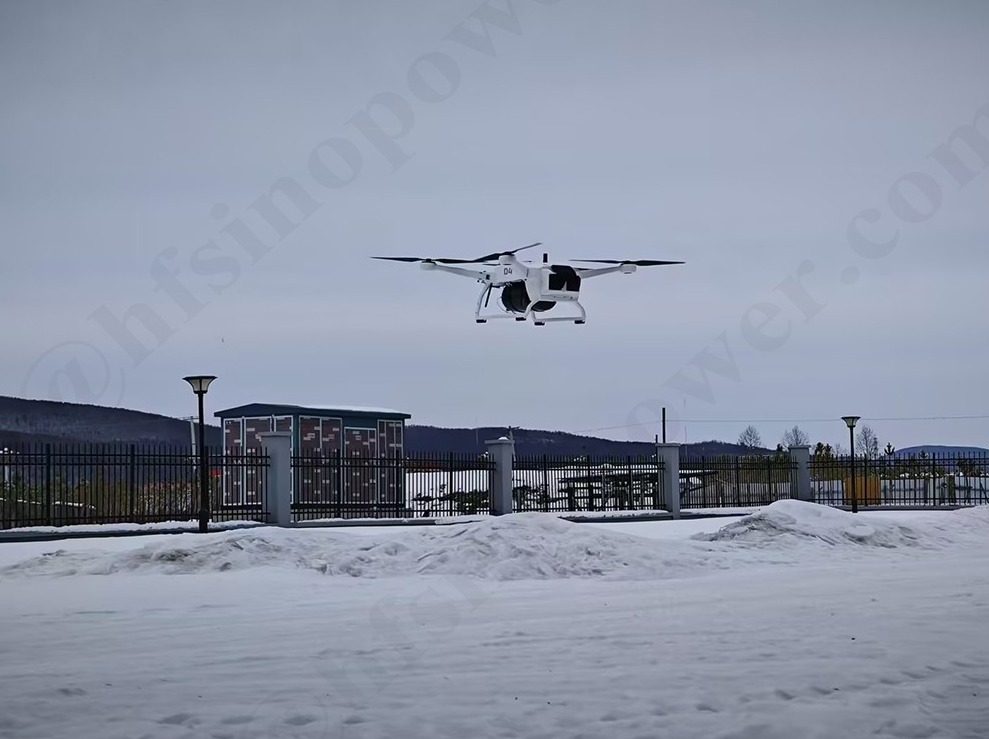
(YorkPedia Editorial):- Shucheng, Anhui Jul 8, 2026 (Issuewire.com) – A hydrogen fuel cell UAV that delivers reliable power at sea level can lose significant output capacity at 3,000 meters above ground. This is not an edge case. It represents a routine operating condition for inspection, mapping, logistics, and environmental monitoring platforms deployed across mountainous terrain, offshore corridors, and high-altitude research zones. Identifying a China Best Hydrogen Fuel Cell Uav Factory requires understanding exactly why that performance gap exists — and what manufacturing depth is required to close it. The answer begins not with marketing claims, but with the physics of the problem itself.
The Altitude Problem Is Not a Battery Problem — It Is a Fuel Cell System Problem
Altitude affects hydrogen fuel cell power systems through a mechanism that lithium battery platforms simply do not share. As elevation increases, ambient air pressure falls. At 3,000 meters, that pressure reaches roughly 70% of sea-level value. Lower pressure directly reduces the oxygen concentration reaching the cathode side of the PEM fuel cell stack. The electrochemical reaction rate drops accordingly, and peak power output follows. This process operates independently of hydrogen supply quality or remaining fuel volume. Consequently, a UAV operator cannot solve this problem by increasing tank capacity or improving battery management. The solution must exist inside the fuel cell system itself. Rubri develops air-cooled PEM fuel cell stacks specifically configured for UAV endurance missions, treating altitude response as a core design parameter rather than an operational footnote.
What Happens Inside the Stack When Pressure Drops
The altitude failure mechanism runs deeper than reduced oxygen availability at the stack inlet. Lower cathode pressure increases resistance to oxygen transport through the gas diffusion layer. This elevation in transport resistance raises local current density non-uniformity across the membrane electrode assembly. Simultaneously, reduced ambient pressure lowers the water vapor saturation point at operating temperature, accelerating membrane drying even when thermal conditions appear stable. The combined effect produces premature voltage decay and, in poorly engineered stacks, localized hot-spot formation within the membrane electrode assembly. These are materials-level and component-level failure modes. Addressing them requires direct engineering control over membrane electrode assembly fabrication and gas diffusion layer production — not system-level parameter adjustment after the fact. Hefei Sinopower Technologies Co., Ltd. manufactures membrane electrode assemblies, gas diffusion layers, bipolar plates, and catalysts in-house. This vertical integration gives the engineering team direct control over the component variables that determine altitude performance, rather than inheriting constraints from external component suppliers.
The Balance of Plant Is Where Altitude Compensation Actually Happens
A well-engineered stack establishes the performance ceiling. The balance of plant determines whether the system reaches it under real operating conditions. At altitude, a fixed-speed air supply system calibrated for sea-level pressure cannot maintain the cathode stoichiometry that the stack requires. The result is oxygen starvation during high-demand maneuvers — precisely the operating conditions where reliable power output matters most. Effective altitude compensation requires variable-speed air supply with active pressure feedback control, thermal management architecture that accounts for reduced convective cooling at lower air density, and hydrogen supply regulation that compensates for changing back-pressure at the anode as altitude varies. Rubri (Hefei Sinopower Technologies Co., Ltd.) integrates air supply, thermal management, and electronic control modules as co-engineered subsystems within its fuel cell system architecture. This integrated approach treats altitude compensation as a designed-in system capability, not a field adjustment applied after deployment reveals the gap.
Lightweight and Power-Dense — Why the Manufacturing Tradeoff Defines UAV Suitability
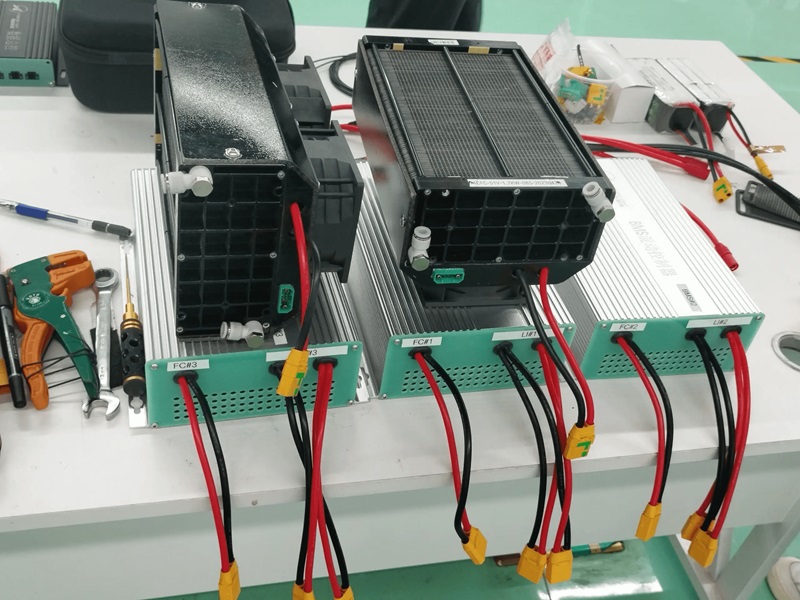
Ground-based and vehicle-mounted fuel cell applications tolerate weight and volume constraints that aerial platforms cannot. Every gram of fuel cell system mass directly reduces UAV payload capacity or shortens operational endurance. Power density — the watts of output per kilogram of system mass — therefore functions as the primary metric separating genuinely UAV-capable fuel cell products from technically sound systems that are operationally impractical for airborne integration. The engineering levers that determine power density include bipolar plate material selection, membrane electrode assembly active area optimization, and balance-of-plant component miniaturization. Hefei Sinopower Technologies Co., Ltd. produces a 550W lightweight air-cooled fuel cell stack built specifically for long-endurance UAV missions. That product reflects design decisions made within UAV integration constraints from the outset — not a ground-based platform reduced in weight through secondary modification. The distinction matters significantly when system performance under real flight conditions is the evaluation standard.
Hydrogen Storage at Altitude — The Supply-Side Variable That Compounds the Power Problem
Altitude affects not only the fuel cell stack but also the hydrogen supply system that feeds it. Pressure regulators calibrated at sea level deliver setpoints that shift at altitude, affecting anode stoichiometry and the stack’s operating point in ways that ground-level testing does not fully expose. UAV platforms also impose strict constraints on hydrogen cylinder mass and volume, limiting the buffer capacity available to absorb demand transients during aggressive maneuvering or rapid altitude change. These supply-side variables compound the stack-side altitude challenge when storage and power system components are selected independently. Rubri manufactures hydrogen tanks specifically configured for UAV applications, with mass and volume envelopes sized for aerial integration. Designing storage and power system components within the same engineering framework — rather than sourcing them separately and integrating them after the fact — prevents supply-side pressure variability from amplifying the stack-side performance deficit that altitude already imposes.
What Separates a Genuine UAV Fuel Cell Factory from an Adapter
Two distinct manufacturing philosophies produce hydrogen fuel cells that appear in UAV applications. The first adapts existing stationary or vehicle-mounted products for aerial use — modifying weight where packaging allows and adjusting balance-of-plant parameters for the new form factor. Performance compromises follow as a consequence of the original design’s assumptions. The second designs UAV fuel cell systems from the airframe integration constraint outward, treating mass, altitude response, thermal management, and hydrogen storage as co-equal inputs from the first engineering decision. The manufacturing capabilities that distinguish the second approach are specific and verifiable: in-house membrane electrode assembly and gas diffusion layer production, dedicated UAV stack assembly infrastructure, integrated balance-of-plant engineering, and deployment experience validated across real-world UAV operating environments — not laboratory approximations. Rubri (Hefei Sinopower Technologies Co., Ltd.) has built cooperative relationships with clients across more than forty countries, spanning research institutions, energy companies, original equipment manufacturers, and industrial enterprises. Its fuel cell solution portfolio extends across UAV platforms, hydrogen fuel cell vehicles, maritime propulsion, forklift drives, and stationary power generation. That cross-sector deployment breadth reflects engineering experience applied under genuinely diverse operating conditions — including the altitude, thermal, and dynamic load profiles that UAV applications impose.
Power loss at altitude is a solvable engineering problem. However, the solution must exist at the component level — in the membrane electrode assembly, the gas diffusion layer, the balance-of-plant architecture, and the hydrogen storage interface — not patched in at the system level after field deployment reveals the gap. For UAV developers evaluating hydrogen fuel cell power systems, a manufacturer’s design philosophy carries as much weight as its published specification. For complete technical details on UAV fuel cell stacks, hydrogen storage solutions, and integrated power system configurations, visit https://www.hfsinopower.com/.
Media Contact
Hefei Sinopower Technologies Co.,Ltd.
+86 400228199
6 floor, block A, Xiangfeng Creative Park, 211 Hongfeng Road, Shushan District, Hefei, Anhui.
This article was originally published by IssueWire. Read the original article here.
