
Complete Buyer’s Guide to China Leading Nickel Bar Company Selection with EN Certifications


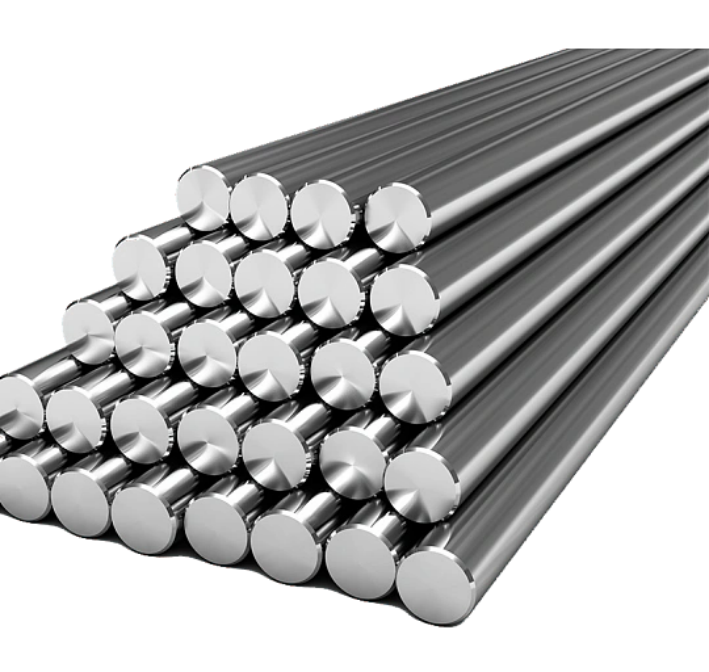
(YorkPedia Editorial):- Baoji, Shaanxi Jul 26, 2026 (Issuewire.com) – Navigating the global procurement landscape for high-performance alloys requires a deep understanding of metallurgy, quality standards, and supply chain integrity.
For engineers and procurement managers seeking top-tier materials for critical infrastructure, partnering with a China Leading Nickel Bar Company has become a pivotal strategy. This comprehensive buyer’s guide explores the essential criteria for selecting premium nickel bars, explaining the significance of European Norm (EN) certifications, detailing key metallurgical characteristics, and outlining the end-to-end procurement process necessary to ensure operational reliability in harsh industrial environments.
STEP 1: Understanding Nickel Bar Basics and Key Industrial Applications
Before initiating supplier negotiations, buyers must evaluate the specific mechanical and chemical properties required for their targeted application. Nickel bars are broadly categorized into commercially pure nickel (such as Nickel 200/201) and complex nickel-base superalloys (including Inconel, Monel, and Hastelloy grades). Pure nickel provides exceptional resistance to caustic alkalis and reducing chemicals, while nickel alloys add chromium, molybdenum, and iron to withstand oxidative, acidic, and elevated-temperature conditions.
The performance of a nickel bar depends heavily on its processing pathway. Advanced production setups utilize Vacuum Arc Remelting (VAR) furnaces combined with heavy-duty fast forging presses. This integrated processing refines the grain structure, eliminates internal macro-segregation, and enhances isotropic mechanical properties. As a result, forged and hot-rolled nickel bars exhibit superior yield strength, fatigue resistance, and uniform thermal expansion compared to standard commercial stock.
These metallurgical advantages make high-purity nickel bars indispensable across several critical sectors:
Chemical Processing: Utilized in high-pressure chemical reactors, heat exchangers, valves, and piping systems exposed to volatile organic compounds and inorganic acids.
Nuclear and Conventional Power Generation: Deployed in steam generator tubing supports, heat exchangers, and structural core components where corrosion fatigue and stress corrosion cracking must be completely prevented.
Marine and Offshore Engineering: Applied in propeller shafts, marine hardware, and desalination units requiring long-term durability against seawater pitting.
Aerospace and Defense: Integrated into high-temperature fasteners, turbine shafts, and exhaust system components subject to cyclic thermal loads.
STEP 2: Demystifying EN Certifications and Quality Compliance
In international trade, material traceability and standardized quality assurance are mandatory. European Norm (EN) certifications serve as global benchmarks for material integrity, verifying that nickel bars meet rigorous chemical composition, mechanical strength, and manufacturing standard limits.
The most crucial quality document in metal procurement is the EN 10204 3.1 Certification. Issued by an independent quality inspection unit validated by the manufacturer, an EN 10204 3.1 Material Test Report (MTR) provides verified proof of:
Chemical Heat Analysis: Precise percentage breakdowns of nickel, chromium, iron, carbon, sulfur, and trace element limits.
Mechanical Testing: Specific yield strength, tensile strength, elongation percentage, and impact toughness values at room and elevated temperatures.
Non-Destructive Testing (NDT): Results from ultrasonic testing (UT), hydrostatic testing, or liquid penetrant testing to confirm internal soundness and surface perfection.
Dimensional and Visual Compliance: Verification that diameter tolerances, straightness, and surface finishes meet exact project specifications.
For high-stakes deployments, such as nuclear power cooling loops or off-shore subsea manifolds, EN 10204 3.2 certification may be required. This level of certification involves independent third-party inspection agencies verifying both the manufacturing process and the final testing procedures. Adhering to these European standards ensures seamless interchangeability and structural safety regardless of where the material is deployed worldwide.
STEP 3: Evaluating Supply Chain Capabilities and Technical Equipment
Selecting the right manufacturing partner involves evaluating their upstream supply chain control, internal production infrastructure, and technical flexibility. A robust supplier must demonstrate full supply chain integration, controlling the entire lifecycle from raw material selection and melting to forging, heat treatment, machining, and final testing.
A leading example of technical execution in this field is TGTY, a fully integrated manufacturer equipped with advanced Vacuum Arc Remelting (VAR) furnaces, precision fast forging units, and comprehensive machining facilities. By controlling the complete processing chain internally, advanced facilities eliminate third-party processing delays and prevent cross-contamination of specialized alloy grades.
Technical capabilities buyers should evaluate include:
Melting and Refining Equipment: Availability of VAR or Vacuum Induction Melting (VIM) technology to ensure ultra-low gas content and clean chemistry.
Forging Precision: High-speed, heavy-tonnage forging presses that achieve deep center deformation, breaking down cast dendrites and producing refined equiaxed grains.
Customization and Machining: Capability to support custom pure nickel bar dimensions, tight straightness tolerances, and specialized surface finishes (such as turned, ground, or polished conditions).
In-House Metallurgy Labs: On-site laboratory facilities capable of performing spectral analysis, mechanical stress testing, and microstructural grain size assessments under standardized procedures.
Real-world performance demonstrates the value of these integrated technical capabilities. Industrial case studies show that high-purity forged nickel rods processed through controlled vacuum melting and precise heat treatment demonstrate exceptional dimensional stability and uniform corrosion resistance when installed in chemical processing reactors and nuclear heat exchanger assemblies.
STEP 4: Streamlining the Global Procurement and Selection Process
To execute a successful procurement contract with a China-based nickel bar supplier, buyers should follow a structured evaluation framework that balances technical compliance with logistics management.
Detailed Technical Specification Definition: Clearly outline the required material grade, EN standards, dimensions, heat treatment state (annealed, stress-relieved, or solution-treated), and surface finish requirements in the initial request for quotation.
Audit of Manufacturing Facilities and Quality Management Systems: Review the supplier’s ISO 9001 certifications, environmental compliance records, and EN material test capabilities. Verify that the factory possesses state-of-the-art forging and heat treatment equipment appropriate for nickel alloys.
Sample Testing and Inspection Protocols: Request pre-shipment sample testing or engage third-party inspection agencies (such as SGS, TUV, or BV) to verify chemical compositions and non-destructive testing results against the EN 10204 3.1 standard.
Logistics, Packaging, and After-Sales Support: Ensure the manufacturer uses heavy-duty protective packaging, anti-corrosion oil coatings, and custom wooden crating to protect precision-ground nickel bars during maritime transport. Establish clear warranty terms and technical support protocols for post-delivery integration.
By adhering to a rigorous selection methodology, industrial buyers can establish reliable long-term supply relationships, minimize structural failure risks, and secure high-performance nickel materials tailored to their exact engineering specifications.
For detailed technical specifications, custom nickel bar solutions, and comprehensive product catalogs, please visit the official corporate website: https://www.tgtiindustrial.com/

Source :Bao Ji Special Steel Titanium Industry Co.,Ltd.
This article was originally published by IssueWire. Read the original article here.
