
How to Select a Professional Battery Equipment Provider for High-Volume Production


(YorkPedia Editorial):- Xiamen, Fujian Jul 27, 2026 (Issuewire.com) – By TOB Technical Team
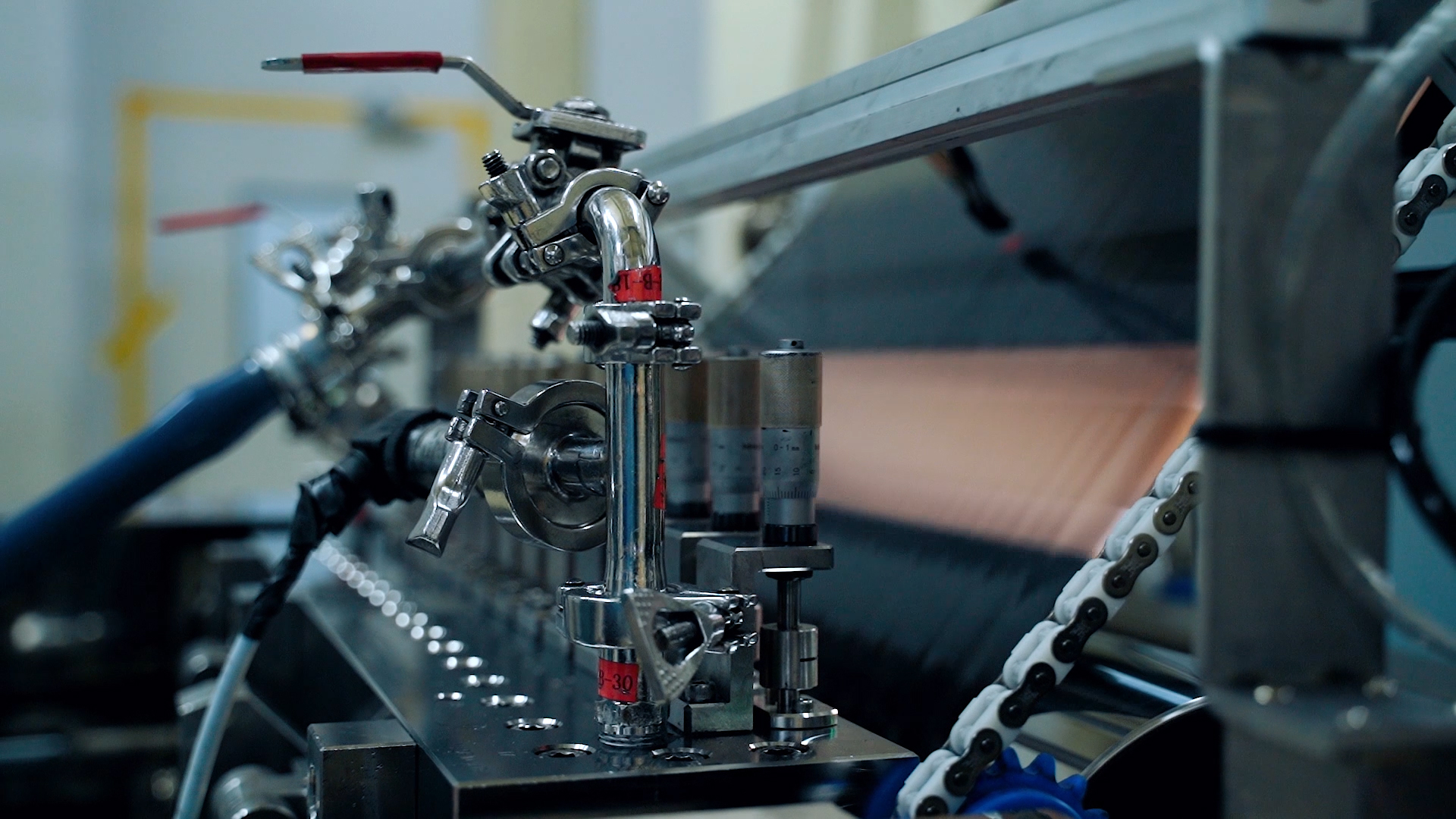
For battery manufacturers, the most expensive equipment decision is rarely the one with the highest sticker price. It is the one that looked correct on the purchase order and went wrong six months after installation — when the coating machine (https://www.tobmachine.com/battery-coating-machine_c142) could not hold areal density tolerance across a full shift, or the winding machine’s alignment accuracy drifted beyond the point where cell capacity variation stayed within specification. By then, the supplier’s commissioning engineers had moved on. The production ramp-up schedule had slipped past recovery. The cost of that decision is not the equipment price. It is the revenue not earned during the months the line was not running at nameplate capacity.
High-precision slot-die battery electrode coating machine applying uniform wet slurry onto metal foil in battery production line
Selecting a battery equipment provider (https://www.tobmachine.com/products) for high-volume production is fundamentally different from buying individual machines for a laboratory. At production scale, the supplier contributes to your factory’s OEE, your product’s quality consistency, and your delivery commitments. This article provides the evaluation framework — not based on catalog comparisons, but on the engineering realities that determine whether equipment performs on a production floor.
Criterion 1: Define What “Professional” Means
A professional battery equipment provider is not defined by its catalog breadth. It is defined by four characteristics that can be verified through observation, not through a sales presentation.
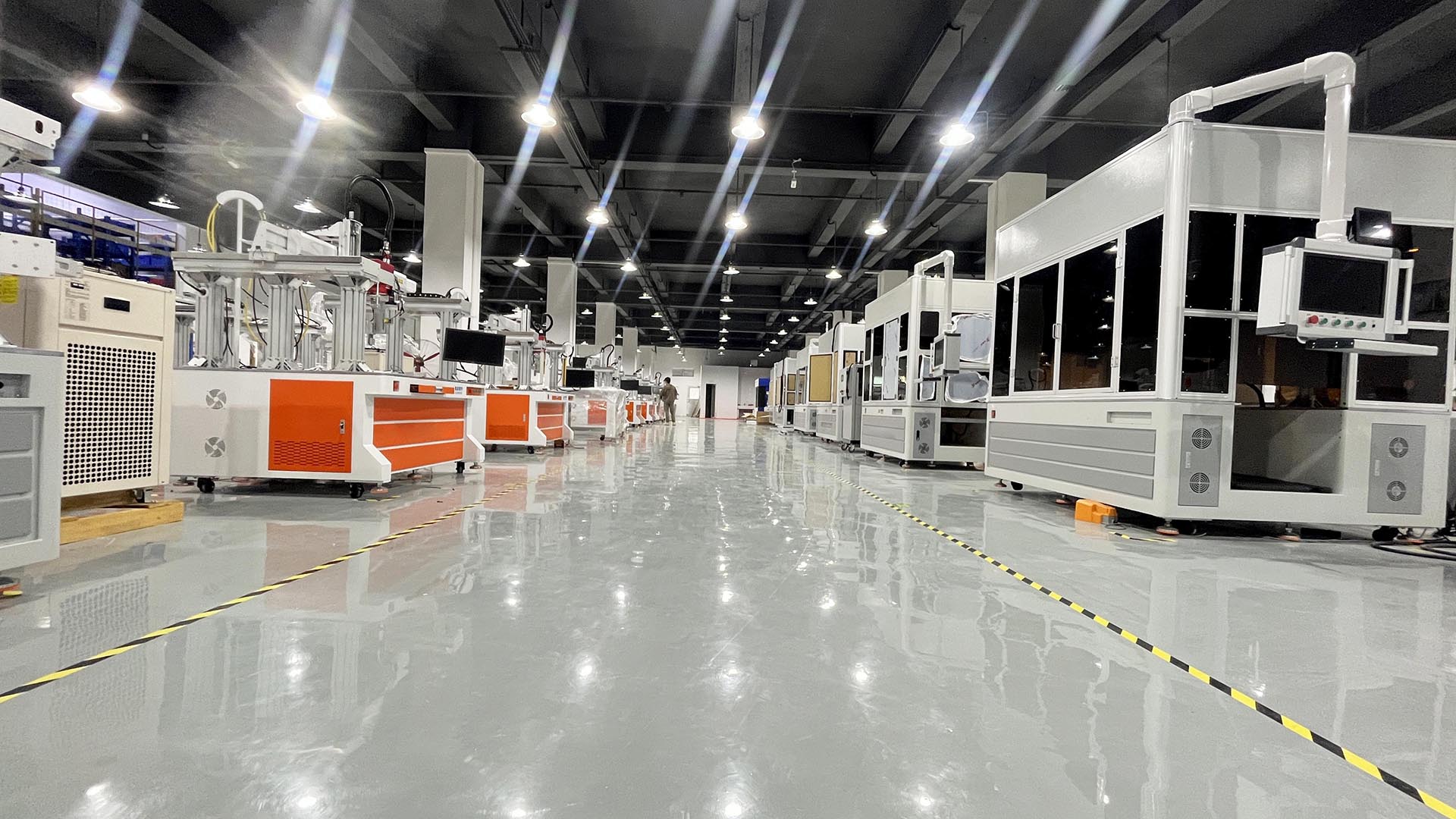
First: the supplier makes its own equipment. It designs and machines the core subsystems — coating dies, mixer gearboxes, winding tension control systems — rather than purchasing them from third parties and assembling them into a frame. A factory tour reveals this instantly. A supplier with CNC machining centers, precision grinding, and balancing test stands is a manufacturer. TOB NEW ENERGY’s machining floor in Xiamen is one such facility. A supplier with only assembly bays is a systems integrator. Both can deliver equipment. Only one controls the precision of the critical components.
Second: the supplier validates its equipment on its own pilot line before delivering it to customers. A pilot line is not a showroom. It is a process validation platform. A supplier who has run a customer’s material through their own mixer, coater, and calender — and can show the resulting data — has performed engineering work. TOB’s Xiamen pilot facility routinely performs this validation for international customers before equipment orders are placed. A supplier without a pilot line is asking the customer to be their process development department.
Third: the supplier’s engineering team has process knowledge specific to the customer’s chemistry. LFP slurry with nano-carbon conductive additives at 60 percent solid content behaves differently in a planetary mixer than NMC slurry at 55 percent solid content with carbon black. A supplier who can describe the difference — in engineering terms, with reference to specific failure modes they have encountered — has process expertise. A supplier who answers “our equipment can handle any chemistry” has a sales script.
Fourth: the supplier’s after-sales support is not a warranty clause. It is an engineering function. When the customer switches from NMC to LFP two years after commissioning, can the supplier provide mixing parameter adjustments, coating profile recommendations, and formation protocol updates based on their own test data with the new chemistry? A supplier who can is an engineering partner. One who cannot is a vendor.
Professional Battery Equipment from TOB NEW ENERGY
Criterion 2: Audit the Engineering Infrastructure
A factory audit reveals more in two hours than a month of email exchanges.
The first stop is not the conference room. It is the pilot line. Ask to see it running. Not a demonstration with the supplier’s standard test slurry — your material, if possible. Observe the equipment’s noise and vibration levels at operating speed. Good equipment does not have resonant frequencies within its operating range. Observe the control system’s operator interface. It should be designed for production operators, not for the engineers who built it. Observe the cleaning and maintenance access. A mixer that takes four hours to clean between formulations is a production schedule constraint.
The second stop is the metrology laboratory. The equipment in this room — coordinate measuring machines, surface roughness testers, laser interferometers, dynamic balancing test stands — is the physical evidence of the supplier’s quality control capability. A supplier with a fully equipped metrology lab measures their own precision. One without is relying on their suppliers’ quality claims.
The third stop is the machining floor. Look at the work-in-progress. What parts are being machined? For what type of equipment? The WIP tells you who the supplier’s customers are and what kind of equipment they are building — information that may be more revealing than a reference list.
Criterion 3: Evaluate Process Knowledge
Equipment parameters can be copied. Process knowledge cannot.
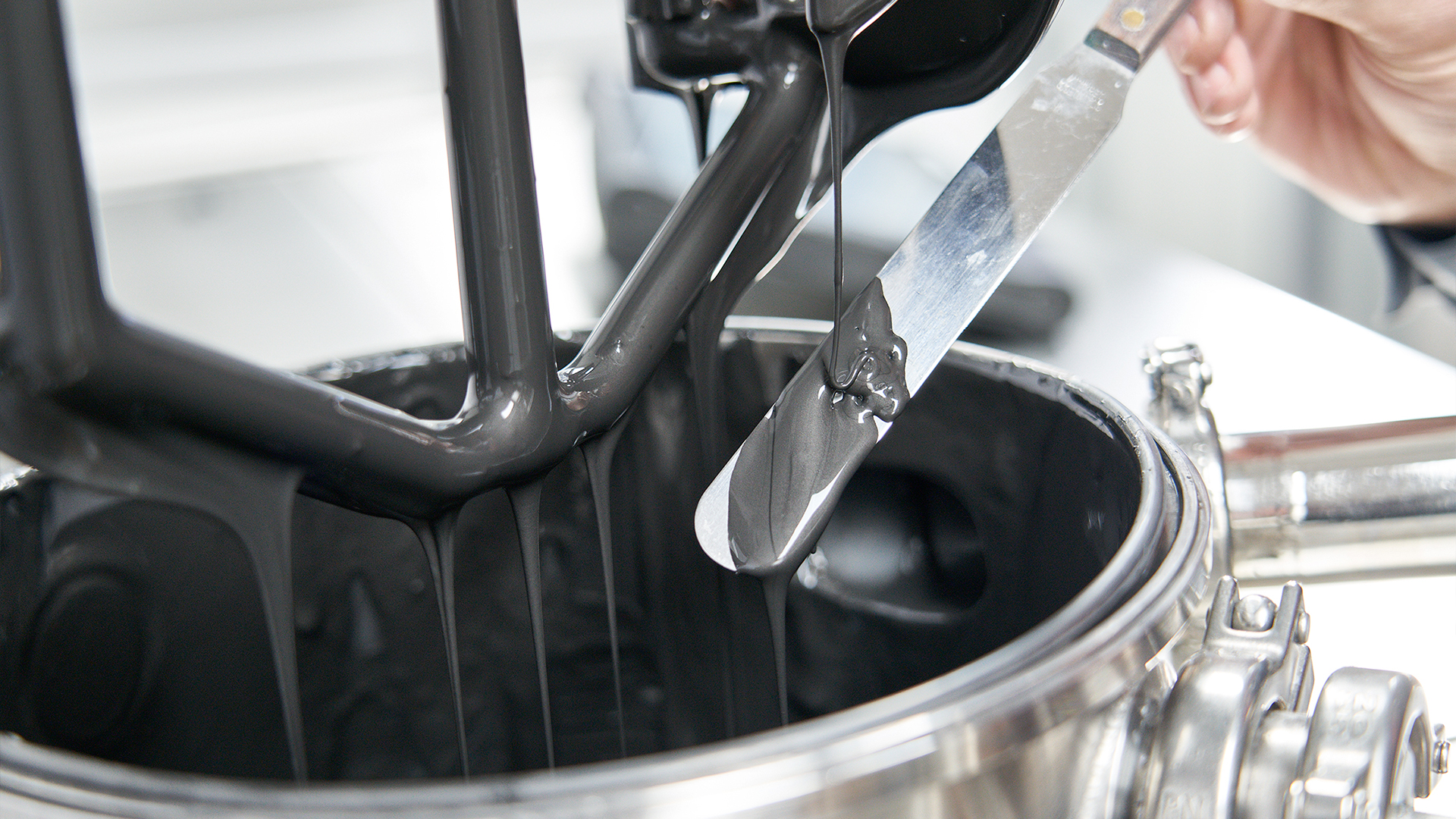
The same mixer(https://www.tobmachine.com/battery-slurry-mixer_c138) specifications — volume, speed range, vacuum level — can produce completely different slurry quality depending on whether the supplier’s engineers understand the dispersion requirements of the customer’s specific material system. A supplier who has optimized mixing parameters for LFP with nano-carbon additives knows that the conductive carbon tends to form stable agglomerates that require higher shear for longer duration than NMC with carbon black — and that excessive shear damages the LFP particle surface, increasing BET surface area and reducing first-cycle efficiency. This is process knowledge. It is acquired by doing, not by reading.
How to test for it: during the technical discussion, pose a specific process scenario. “We are using D50 of 8 microns for NMC811, with 2.5 percent PVDF at 62 percent solid content. Based on your experience, what does the viscosity-versus-time curve typically look like during mixing? What dispersion anomalies should we anticipate?” A supplier with process knowledge answers with specifics — including what can go wrong and how to prevent it. A supplier without answers with reassurances.
At the Xiamen-based manufacturer TOB NEW ENERGY (https://www.tobmachine.com), the application laboratory runs customer-specific mixing, coating, and cell testing trials — building process knowledge into every equipment recommendation as an engineering function, not a sales tool. It is the output of an engineering function.
Engineer sampling battery electrode slurry from a planetary mixer during pilot line validation
Criterion 4: Use Patents as an Objective Filter
A company brochure can claim “strong R&D capability.” A patent is a legal document filed with a national patent office. It is publicly searchable. It describes a specific technical problem and a specific claimed solution. Its existence is independently verifiable.
When evaluating battery equipment suppliers, a patent search answers three questions. Does the supplier have patents? A supplier with zero patents and one with a portfolio are making different claims about internal development. What do the patents cover? Patents across multiple equipment categories — mixing, coating, calendering, winding — indicate broad engineering capability. Patents concentrated in one narrow area may indicate deep specialization or may indicate a single engineer’s work. What is the time span of the patent filings? Patents filed continuously over a decade indicate sustained R&D investment. Patents all filed in the same year may indicate a policy-driven filing exercise.
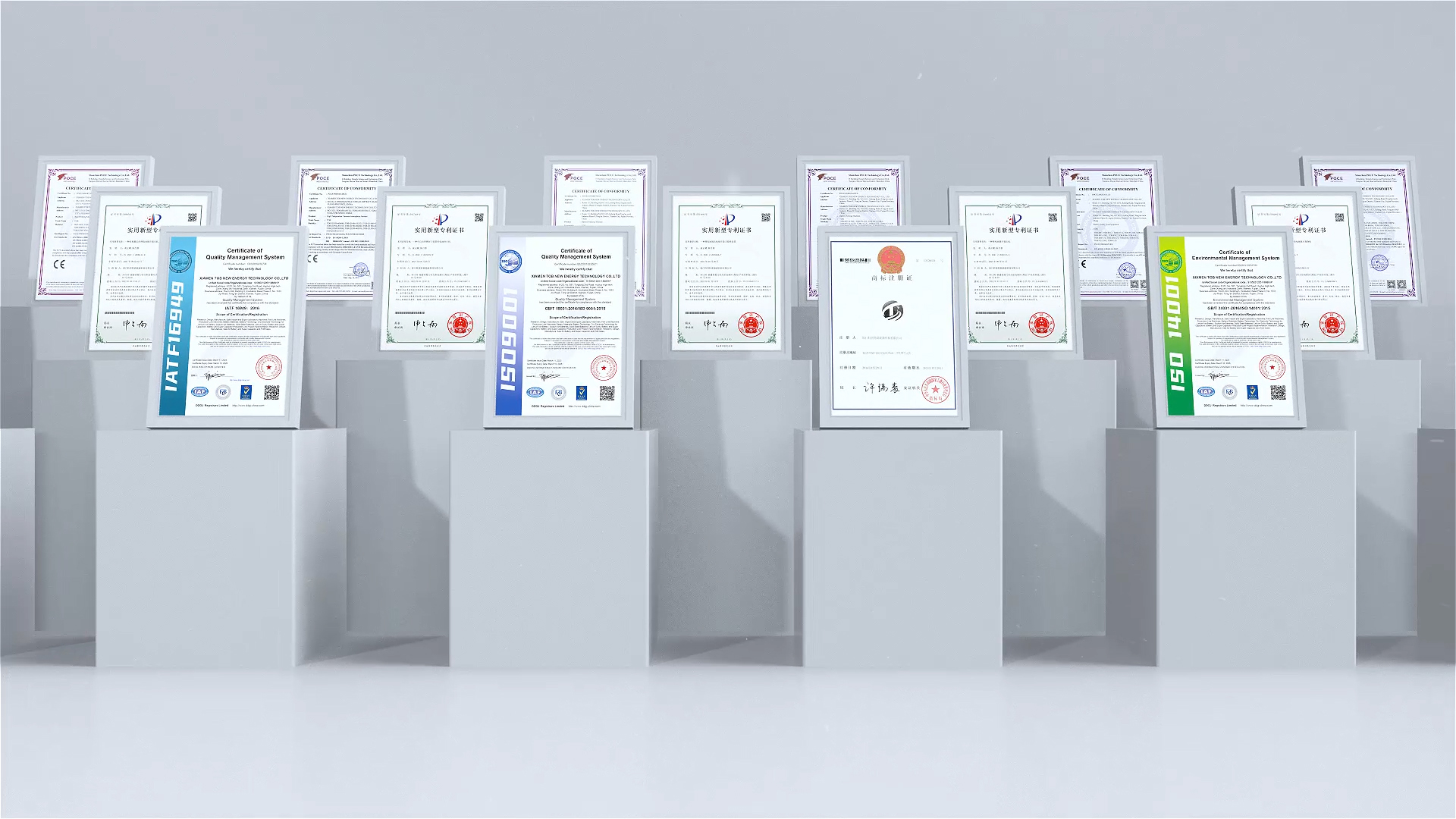
Five calendering-related patents from TOB NEW ENERGY illustrate what a coherent portfolio looks like. An electrode rolling press (https://www.tobmachine.com/electrode-rolling-press_c143) patent (CN202122096183) covers overall machine architecture. A structurally stabilized rolling press patent (CN202122099131) addresses the mechanical rigidity problem — roll deflection under high pressure producing thickness variation across the electrode width. A dry-process electrode film rolling press patent (CN202223378736) extends calendering technology to dry electrode manufacturing, a next-generation process that eliminates solvent use entirely. A film lamination and extension mechanism patent (CN202223206725) addresses a specific sub-process. A dust and iron removal device patent (CN202122023666) addresses quality assurance during calendering — preventing particle contamination of the electrode surface. These five patents, spanning machine architecture, precision engineering, next-generation processes, sub-system mechanisms, and quality assurance, form a coherent technical narrative. They are searchable in China’s national patent database. Their existence is not a marketing claim. It is a legal fact.
TOB NEW ENERGY patents and certificates
Criterion 5: Evaluate the After-Sales Engineering Function
Production equipment after-sales is not repair. It is precision management.
The most important after-sales deliverable for a battery equipment provider is accuracy drift management. Formation cabinet channel electronics drift over months of continuous operation. Coating die gaps shift with thermal cycling. Welding sonotrodes wear with every cycle. A supplier who provides periodic calibration with documented accuracy data — predicting when recalibration will be needed based on operating hours — is managing precision. TOB NEW ENERGY’s after-sales program includes this predictive calibration as a standard service component. One who waits for the customer to report a quality problem is reacting to failure.
The second after-sales deliverable is process support across chemistry transitions. When the customer’s product roadmap shifts from NMC to LFP, or from lithium-ion to sodium-ion, the supplier’s engineering team should be able to provide mixing parameter adjustments, coating profile modifications, and formation protocol updates — because they have already tested these transitions on their own pilot equipment. This is the difference between a supplier who sells machines and one who sells manufacturing capability.
The third after-sales deliverable is spare parts availability for the equipment’s service life. A coating die damaged by operator error. A mixer seal degraded by solvent exposure. A sonotrode worn past its reconditioning limit. These are not warranty claims. They are operational events. The supplier’s spare parts inventory, reconditioning services, and lead times determine how long the line is down.
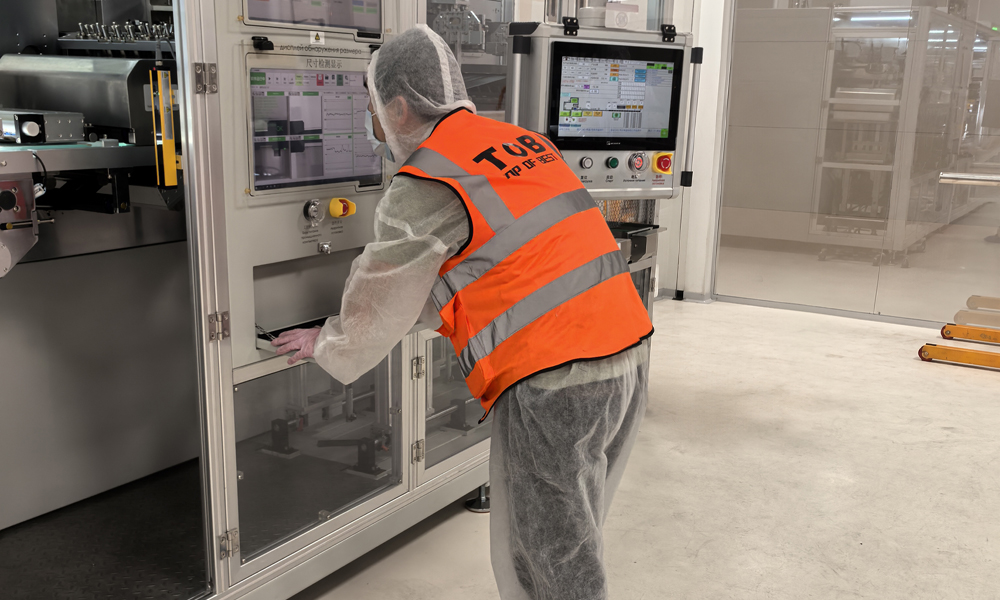
On-site service engineers are inspecting the electrode die-cutting machine
Criterion 6: The Decision Framework
Selecting a battery equipment provider for high-volume production is not a procurement exercise. It is an engineering partnership decision that should follow a structured evaluation.
Define the process window you need, not the equipment you want. Equipment is the means. The process window — the range of operating parameters within which the cell meets specification — is the end.
Audit the supplier’s engineering infrastructure. Pilot line. Metrology lab. Machining floor. These three facilities tell you more about the supplier’s capability than any reference call.
Test with your materials. Bring your cathode powder, your anode powder, your slurry formulation. Run them through the supplier’s pilot equipment. Measure the results. This is the only evaluation that directly predicts how the equipment will perform in your factory.
Verify the supplier’s R&D through their patent portfolio. A patent search takes minutes and provides independently verifiable evidence of engineering investment.
Evaluate the after-sales engineering function — accuracy drift management, process support across chemistry transitions, and spare parts availability over the equipment’s service life. The purchase price is paid once. The after-sales relationship determines the equipment’s OEE for the next decade.
Battery Equipment Supplier Selection Summary: Selecting a battery equipment provider for high-volume production requires evaluation criteria that extend beyond catalog specifications. A professional supplier is defined by in-house manufacturing of core subsystems, self-operated pilot lines for process validation, chemistry-specific process knowledge, and an after-sales engineering function that manages accuracy drift and supports chemistry transitions. A factory audit should prioritize the pilot line, metrology laboratory, and machining floor — not the conference room. The supplier’s patent portfolio, when analyzed for technical coherence across equipment categories and filing time span, provides publicly verifiable evidence of internal R&D. Testing the supplier’s equipment with the customer’s actual materials remains the most definitive assessment method. The purchase price is paid once. The engineering relationship determines production performance for a decade.
TOB Technical Team — Xiamen TOB New Energy Technology Co., Ltd.
Media Contact
XIAMEN TOB NEW ENERGY TECHNOLOGY CO., LTD.
86-18120715609
Building 5th, NO.1633, Jicheng Road, Tong’an torch Industry Phase II, Tong’an District, Xiamen City, Fujian Province, China

This article was originally published by IssueWire. Read the original article here.
