
From the Air Force to the Research Floor: Justin Coffeen on Why Principled Thinking Drives Better Clinical Outcomes


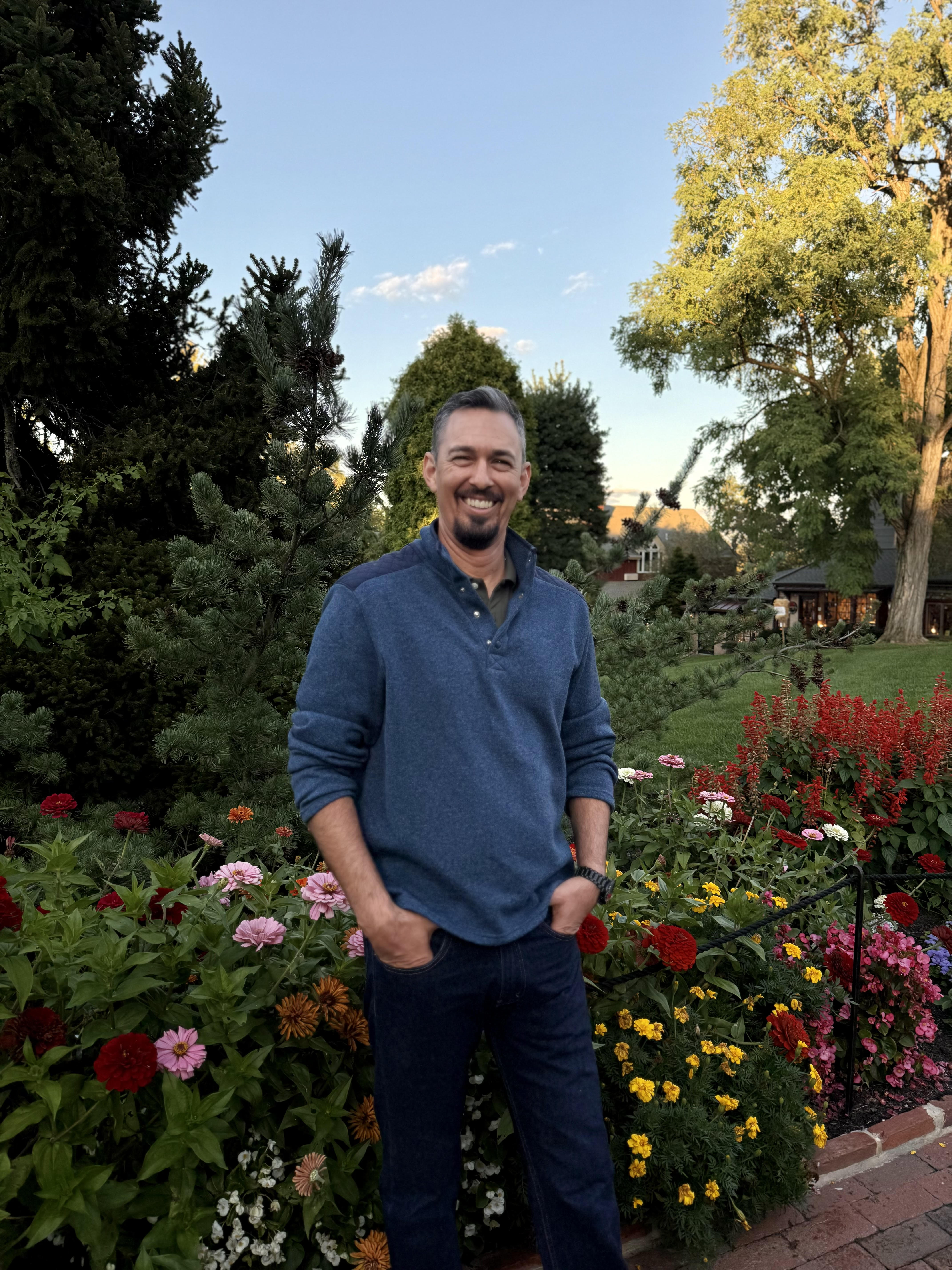
How service, science, and hands-on clinical training are reshaping research culture in Lakewood Ranch, Florida.
(YorkPedia Editorial):- Lakewood Ranch, Florida Aug 16, 2026 (Issuewire.com) – LAKEWOOD RANCH, Florida
Clinical research is a field built on precision. Every data point, every signed informed consent form, every adverse event notation feeds into a chain of decisions that shapes whether a treatment reaches the patients who need it. Yet across the industry, a persistent gap exists between the standards written into Good Clinical Practice guidelines and the standards applied at the site level. The gap is not only a training problem. It is a comprehension problem.
Justin Coffeen sees this clearly. The Lakewood Ranch-based clinical research professional, educator, and entrepreneur has spent his career moving across disciplines that most professionals never connect: military service, hands-on patient care, and the highly regulated world of clinical trials. Each transition sharpened a philosophy that now defines his approach to research quality and team development. Coffeen believes the research industry does not need more checklists. It needs more clarity.
A Path Built Across Three Distinct Chapters
Coffeen’s career does not follow a straight line, and he does not present it as though it should. His first chapter was the United States Air Force, where military service gave him something no classroom could replicate: a working model of how discipline, intent, and accountability function under pressure. The Air Force trained Coffeen to understand the difference between completing a task and completing a task with purpose.
His second chapter came through Life Chiropractic College West, where he earned his Doctor of Chiropractic degree before opening a clinical practice focused on sports injury management and rehabilitation. From 2013 to 2017, Coffeen worked directly with patients, managing recovery, documenting outcomes, and navigating cases where the stakes were physical and immediate. Clinical practice, he notes, teaches things that protocols alone cannot. It teaches what it feels like when documentation matters.
The third chapter, clinical research, brought those two experiences together. Coffeen pursued certification in Good Clinical Practice, the international standard that governs the design, conduct, and reporting of clinical trials, and built from there into his current work as a researcher, educator, and consultant operating out of Lakewood Ranch, Florida.
A Research Philosophy Centered on Comprehension
The principle that anchors Coffeen’s work is one he states plainly: compliance without comprehension is just paperwork.
For Coffeen, that phrase is not a provocation. It is a diagnosis. The clinical research field has invested heavily in training programs, checklists, and standard operating procedures. What it has invested in less consistently, he believes, is the foundational understanding that gives those tools their meaning.
“The military taught me that a mission without clear intent is just activity,” Coffeen explains. “I bring that same clarity to clinical research. Every protocol, every document, every decision has to trace back to why it matters.”
That orientation shapes how Coffeen approaches his own work and how he trains others. Good Clinical Practice guidelines exist to protect research participants, preserve data integrity, and ensure that trial results are trustworthy. When a site team understands that chain of purpose, he believes, their execution changes. They stop looking for the minimum acceptable answer and start asking whether their work will hold up to scrutiny because it should.
Bridging Two Worlds: Clinical Practice and Clinical Research
The years Coffeen spent as a chiropractic physician inform his research work in ways that are difficult to teach directly. Patient-facing care requires precision under conditions that are never fully controlled. A chart entry matters because a real person’s treatment depends on it. An informed consent conversation matters because a real person is deciding whether to participate in something that carries genuine risk.
“Chiropractic practice put me in the room with real patients, real pain, and real stakes,” Coffeen says. “That experience doesn’t leave you. It changes how you read a protocol and what you’re willing to accept as good enough.”
This is the translation Coffeen makes explicit in his work with research teams in Lakewood Ranch and beyond: the same care a clinician brings to a patient encounter belongs in every layer of the research process. Source document accuracy, adverse event reporting, and regulatory binder maintenance are not administrative tasks. They are the clinical record of a trial, and they carry the same weight.
When Compliance Becomes Culture
Coffeen draws a sharp distinction between sites that comply with GCP and sites that understand it. Compliance without comprehension is just paperwork, and paperwork, under audit conditions, rarely holds. What holds is a team that has internalized the reasoning behind each standard.
“When a site team understands why GCP exists, what it protects and who it protects, the quality of the work changes entirely,” he says.
Building that culture requires more than a one-time training module. It requires consistent reinforcement, honest feedback, and a team environment where questions about process are welcomed rather than treated as inefficiency. Coffeen sees his role as creating the conditions for that kind of learning, whether inside a single site or across a broader research organization.
“There is a real gap between what gets taught in training and what happens when someone sits down in front of an actual source document,” he says. “Closing that gap is the work.”
Mission First, Method Second
Coffeen’s time in the Air Force introduced him to a principle he has carried into every professional context since: mission first, method second. The sequence is not casual. It reflects a specific belief about how good decisions get made.
When a research team starts with the mission, protecting participant safety and producing reliable data, the right method tends to follow. When a team starts with the method, filling in fields, checking boxes, generating signatures, the mission can drift. Small errors accumulate. Audit findings surface that should not have been possible.
“Mission first, method second,” Coffeen says. “That sequence matters. If you know what you’re trying to protect, the right process becomes obvious.”
That orientation, developed across military service and clinical practice, is what Coffeen brings to the research teams and sites he works with in Lakewood Ranch, Florida, and across the broader healthcare research community.
The Discipline That Transfers
Military service does not teach a person to run a clinical trial. What it does teach is the mental architecture that makes disciplined execution possible: accountability to a standard, clarity of purpose, and the understanding that shortcuts taken under pressure tend to surface as failures later.
For Coffeen, that architecture is transferable. It transfers from a flight line to a chiropractic clinic. It transfers from a chiropractic clinic to a research site. The setting changes; the underlying discipline does not.
Compliance without comprehension is just paperwork. That phrase, for Coffeen, is also a north star. When a site team is pressured to move faster, document less carefully, or treat a protocol deviation as too minor to report, the question is always the same: do they understand enough to know what they are risking, or are they following instructions until something goes wrong?
Looking Ahead in Lakewood Ranch
Coffeen sees the Lakewood Ranch area and the broader Suncoast region as a growing environment for healthcare research. Sites are expanding. Sponsors are paying closer attention to site quality as a variable that affects data reliability and timeline performance. The infrastructure, he believes, is there.
What the region needs now, Coffeen argues, is a deeper bench of research professionals who bring both scientific grounding and the kind of principled discipline that produces consistent, audit-ready work.
“The research community here in Lakewood Ranch and across the Suncoast is growing,” he says. “The infrastructure is there. What it needs now are professionals who bring both the science and the discipline to do it right.”
Coffeen plans to continue his work as an educator and researcher in Lakewood Ranch, Florida, developing training approaches that close the gap between GCP certification and genuine GCP comprehension.
“Discipline isn’t a tactic,” he says. “It’s a foundation. Everything else, the skills, the certifications, the tools, sits on top of that. Without it, nothing holds.”
About Justin Coffeen, D.C.
Justin Coffeen, D.C., is a clinical research professional, educator, and entrepreneur based in Lakewood Ranch, Florida. He holds a Doctor of Chiropractic degree from Life Chiropractic College West and is certified in Good Clinical Practice under ICH-GCP, the internationally recognized standard governing the design, conduct, and reporting of clinical trials. His clinical background includes a chiropractic practice focused on sports injury management and rehabilitation, which he operated from 2013 to 2017. Prior to his clinical career, Coffeen served in the United States Air Force, an experience that established the disciplinary and operational foundation his professional philosophy is built on.
Coffeen now applies that background across clinical research education, site support, and professional development. His work centers on building the kind of GCP comprehension, not just GCP compliance, that produces reliable data, protects research participants, and prepares site teams to perform consistently under scrutiny.
He is based in Lakewood Ranch, Florida, where he continues to develop his work in clinical research education and practice.

This article was originally published by IssueWire. Read the original article here.
