Comparing Aqueous (Water-Based) Cleaning for Leaded PCBAs: Venture Electronics vs. Traditional Methods


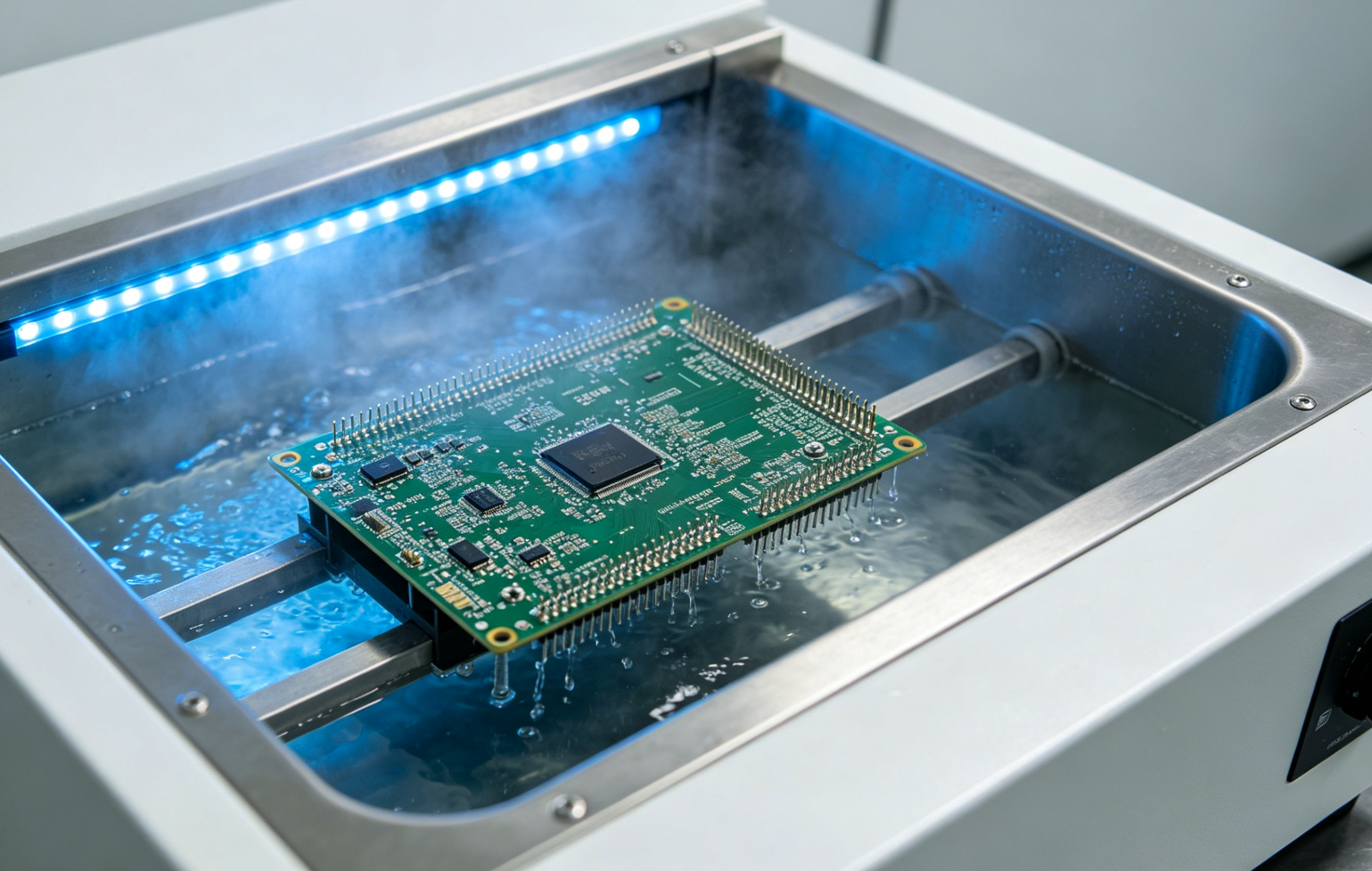
(YorkPedia Editorial):- Shenzhen, Guangdong May 31, 2026 (Issuewire.com) – The precision required for automotive electronics and medical devices currently drives a fundamental shift in how engineers approach board cleanliness. In these sectors, microscopic residues are no longer just a cosmetic concern; they are potential catalysts for electrochemical migration and leakage currents that compromise system integrity. As component density increases and pitch distances shrink, traditional decontamination protocols like solvent-based washing and ultrasonic agitation face increasing technical and regulatory pressure. High-performance assembly now demands a balance between aggressive contaminant removal and the preservation of delicate internal structures. To meet these rigorous standards, top-rated aqueous cleaning services for leaded solder assemblies have become the primary methodology for achieving high ionic purity. By integrating nitrogen vacuum reflow processes, Venture Electronics provides a stabilized cleaning solution that ensures long-term reliability without the environmental or mechanical risks of legacy methods.
The Mechanics of Decontamination: Principles and Residue Control
Venture Electronics implements a specialized cleaning strategy that addresses post-solder contaminants through specific chemical and physical mechanisms. The effectiveness of these aqueous systems, compared to traditional methods, is defined by their distinct operational principles and material compatibility:
- Aqueous Chemical Action:The process utilizes deionized (DI) water enhanced with specialized saponifiers. These agents react with acidic rosin and resin residues commonly found in leaded processes, converting non-polar contaminants into water-soluble soaps. This chemical transformation ensures that even stubborn residues are emulsified and rinsed away efficiently.
- Ionic Removal Efficiency: Because water is a naturally polar solvent, Venture’s aqueous systems excel at dissolving the metallic salts and activators that lead to dendritic growth. This results in superior ionic cleanliness scores, often exceeding the baseline requirements of many chemical solvent alternatives.
- The Risks of Ultrasonic Cavitation:While ultrasonic methods provide deep penetration into tight gaps via microscopic vacuum bubble implosions, this mechanical energy often causes “micro-damage.” Components handled by Venture, such as crystal oscillators and MEMS sensors, are protected from high-frequency vibrations that otherwise leads to latent structural fatigue.
- Solvent and VOC Limitations:Traditional solvent cleaning relies on chemical dissolution, but many effective fluids are classified as Volatile Organic Compounds (VOCs). Furthermore, some solvents struggle to dissolve modern modified resins, avoids film-forming issues that can impair the adhesion of conformal coatings. Venture’s water-based approach avoids these film-forming issues entirely.
Environmental Compatibility and Structural Integrity
Manufacturing facilities today must operate within the strict frameworks of global directives such as RoHS and REACH. Aqueous cleaning solutions provide a significant advantage by eliminating VOC emissions and reducing the overall chemical footprint of the factory. Since water serves as the primary carrier, the process aligns with sustainability goals without sacrificing the rigorous cleaning power required for high-reliability boards. This transition to green chemistry often results in safer working environments and simplified waste management protocols.
Beyond environmental factors, the physical safety of the assembly is a critical differentiator. High-density boards frequently feature fragile wire bonds and fine-pitch Ball Grid Arrays (BGAs). Aqueous processes utilize a gentle spray-in-air or immersion flow that cleans the board without subjecting it to high-frequency mechanical stress. This ensures that delicate silicon structures and solder joints remain structurally sound. In contrast, the aggressive nature of certain chemical solvents can degrade component markings or soften plastic housings, creating reliability risks that may not appear until the product is deployed in the field.
Reducing Decontamination Burden through Upstream Process Optimization
True reliability is achieved when cleaning is treated as part of a holistic manufacturing chain rather than an isolated end-of-line task. A common pitfall in standard assembly is relying on harsh cleaning to fix issues caused by poor soldering environments. Soldering in oxygen-rich atmospheres increases oxidation, which requires more active fluxes and leaves behind harder, charred residues that are difficult to remove.
Venture Electronics addresses this by utilizing nitrogen vacuum reflow technology. Performing the soldering process in an inert nitrogen environment significantly inhibits the formation of oxides. The vacuum stage then removes gas bubbles from the molten solder, resulting in high-density, void-free connections. Because the resulting residues are less oxidized and less abundant, the subsequent aqueous cleaning phase only needs to perform “light purification.” This integrated strategy minimizes the chemical and physical impact on the components, as the cleaning cycle can be shorter and the chemistry milder.
Strategic Application of Aqueous Decontamination
Choosing the correct cleaning protocol requires a detailed assessment of the board’s architecture and its end-use environment. Aqueous cleaning is the preferred standard for mixed leaded and lead-free processes where the removal of complex flux chemistries is mandatory. It is particularly essential for assemblies that must comply with IPC-6012 standards for medical or automotive applications. Precision boards containing sensors or oscillators benefit most from this method because it avoids the structural risks associated with mechanical vibration.
However, certain hardware configurations require specific precautions. Non-sealed components, such as some electrolytic capacitors, relays, or open-frame speakers, may be sensitive to liquid ingress. In these cases, engineering teams must conduct thorough evaluations to prevent moisture entrapment. Furthermore, aqueous systems require a high-efficiency drying stage to ensure no residual moisture remains trapped under low-clearance components like QFNs. While this adds a processing step, the gain in long-term electrical stability is a necessary trade-off for high-stakes electronics.
Defining Value in High-Reliability Cleaning Services
The core value of advanced cleaning lies in the intersection of electrical performance and regulatory compliance. By adopting a “Nitrogen Soldering + Gentle Aqueous Cleaning” framework, manufacturers can ensure that their products meet the highest cleanliness thresholds while completely avoiding the mechanical damage risks inherent in ultrasonic methods.
Venture Electronics maintains a sophisticated support infrastructure to assist engineers from the initial prototyping phase through to full-scale production. Operating from the global manufacturing hub of Shenzhen, the organization provides 24/7 technical support to ensure rapid delivery and technical accuracy. Every stage of the decontamination process adheres to IPC-CH-65B cleaning guidelines. To provide complete transparency, ionic contamination testing data is included as a standard part of the delivery documentation. This rigorous, data-driven approach allows customers to verify that their assemblies are ready for integration into the most demanding technological environments.
For more information on PCB assembly and specialized cleaning solutions, please visit: https://www.venture-mfg.com/
Media Contact
Venture Electronics Tech Ltd.
+86-0755-85296692
Building 36, Chentian Industrial Area Xixiang, Bao an District, Shenzhen, GuangDong, China
This article was originally published by IssueWire. Read the original article here.