
What Defines a Certified Electric Coffee Grinder Manufacturer? A Look into Blossom’s CE and FCC Standards


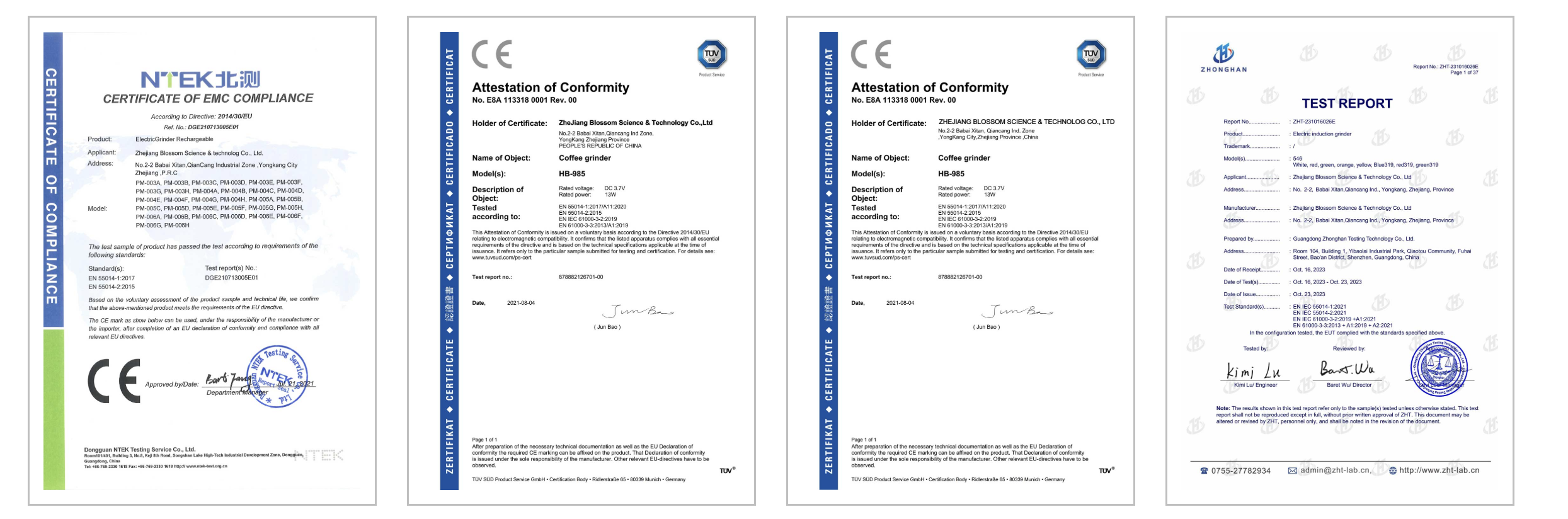
(YorkPedia Editorial):- Jinhua, Zhejiang Jun 6, 2026 (Issuewire.com) – What defines a Certified Electric Coffee Grinder Manufacturer?
While aesthetic appeal and grind consistency are frequently highlighted in consumer reviews, true manufacturing excellence is rooted in rigorous regulatory compliance, electrical safety, and electromagnetic compatibility. An electric coffee grinder is not merely a mechanical tool; it is a high-torque kitchen appliance that operates under intense mechanical stress and electrical loads. Therefore, official certifications such as the CE (Conformité Européenne) mark and the FCC (Federal Communications Commission) declaration are not elective design elements–they are the baseline definitions of engineering accountability and global market readiness.
Blossom Revolutionizing Home Brewing
As a prominent developer in the premium kitchenware sector, JinHua Blossom Co., Ltd. has positioned its engineering framework around these stringent international protocols. The company’s operational philosophy began with a focused objective: to democratize precision grinding so that everyday consumers could experience optimal extraction without operational complexity. Over years of iterative development, this single-product focus has matured into a comprehensive manufacturing operation dedicated to high-performance kitchen electronics.
By aligning its manufacturing lines with global safety standards, Blossom has effectively bridged the gap between professional-grade performance and domestic safety. The contemporary home brewing environment demands appliances that integrate seamlessly into daily routines without posing electrical hazards or disrupting household communication networks. To understand how a manufacturer achieves this balance, it is necessary to examine the technical architecture required by modern certification frameworks.
I. The Technical Matrix of CE Certification: Safety and Structural Integrity
The CE marking represents a manufacturer’s declaration that a product complies with the essential health, safety, and environmental protection legislation of the European Economic Area (EEA). For an electric coffee grinder, achieving CE compliance requires a multi-disciplinary approach to appliance engineering.
First, the appliance must comply with the Low Voltage Directive (LVD). Electric grinders utilize high-torque motors to fracture hard, roasted coffee beans. This process generates internal heat and mechanical resistance. CE compliance guarantees that the internal wiring, insulation materials, and structural housing are engineered to withstand continuous thermal loads without degradation. It ensures that consumers are completely insulated from high-voltage internal components, mitigating the risks of short circuits or electrical shocks even during prolonged operational cycles.
Second, the appliance must achieve strict compliance with the Electromagnetic Compatibility (EMC) Directive. Electric grinders house high-speed motors and electronic switching circuits that can generate significant electromagnetic disturbance. CE compliance guarantees that the grinder’s internal suppression components prevent it from disrupting nearby household electronics, while ensuring the appliance itself possesses adequate immunity to external electromagnetic interference, maintaining stable and predictable operation.
II. Deciphering FCC Standards: Electromagnetic Compatibility and Grid Stability
While CE certification addresses physical and electrical safety, FCC compliance validates a product’s electromagnetic harmony within its operating environment. Administered by the Federal Communications Commission in the United States, FCC certification is mandatory for digital devices and micro-processor-controlled appliances that emit radiofrequency energy.
Modern electric coffee grinders increasingly employ electronic control boards, digital timers, and variable speed modules. These digital components utilize internal oscillators that generate radiofrequency signals. Without proper shielding, an electric grinder can act as an unintentional radiator, broadcasting electromagnetic interference (EMI) through the air or conducting it back into the household electrical grid.
FCC testing ensures that the emissions from the grinder’s internal circuitry remain well below established thresholds. Compliance means the appliance will not interfere with domestic wireless networks, smart home devices, cellular communications, or nearby television and radio receivers. Additionally, FCC certification verifies that the grinder possesses adequate electromagnetic immunity, meaning its own digital timer or automatic shut-off mechanism will not malfunction when exposed to ambient radiofrequency signals from other household electronics.
III. The Strategic Importance of Certified Compliance for Global Supply Chains
For commercial distributors, retailers, and OEM partners, sourcing products from a certified manufacturer is a critical risk-management strategy. The presence of valid CE and FCC certifications serves as a verifiable benchmark of manufacturing maturity, indicating that the production facilities operate under strict quality management systems.
From a logistical and legal perspective, uncertified appliances pose severe liabilities, including customs seizures, regulatory fines, and mandatory product recalls. Conversely, certified compliance streamlines international trade pathways, allowing smooth transit through European and North American ports of entry.
Beyond regulatory compliance, these standards provide a verifiable guarantee of product longevity. The rigorous testing required for CE and FCC compliance–ranging from thermal stress testing to structural drop tests–forces manufacturers to utilize superior components, such as heavy-duty copper-wound motors, precision-aligned burr sets, and stabilized circuit boards. The result is a lower return rate, minimized warranty claims, and enhanced consumer trust for global brand partners.
Engineering Case Study: The Automatic Mini Electronic Coffee Bean Grinder with Cable
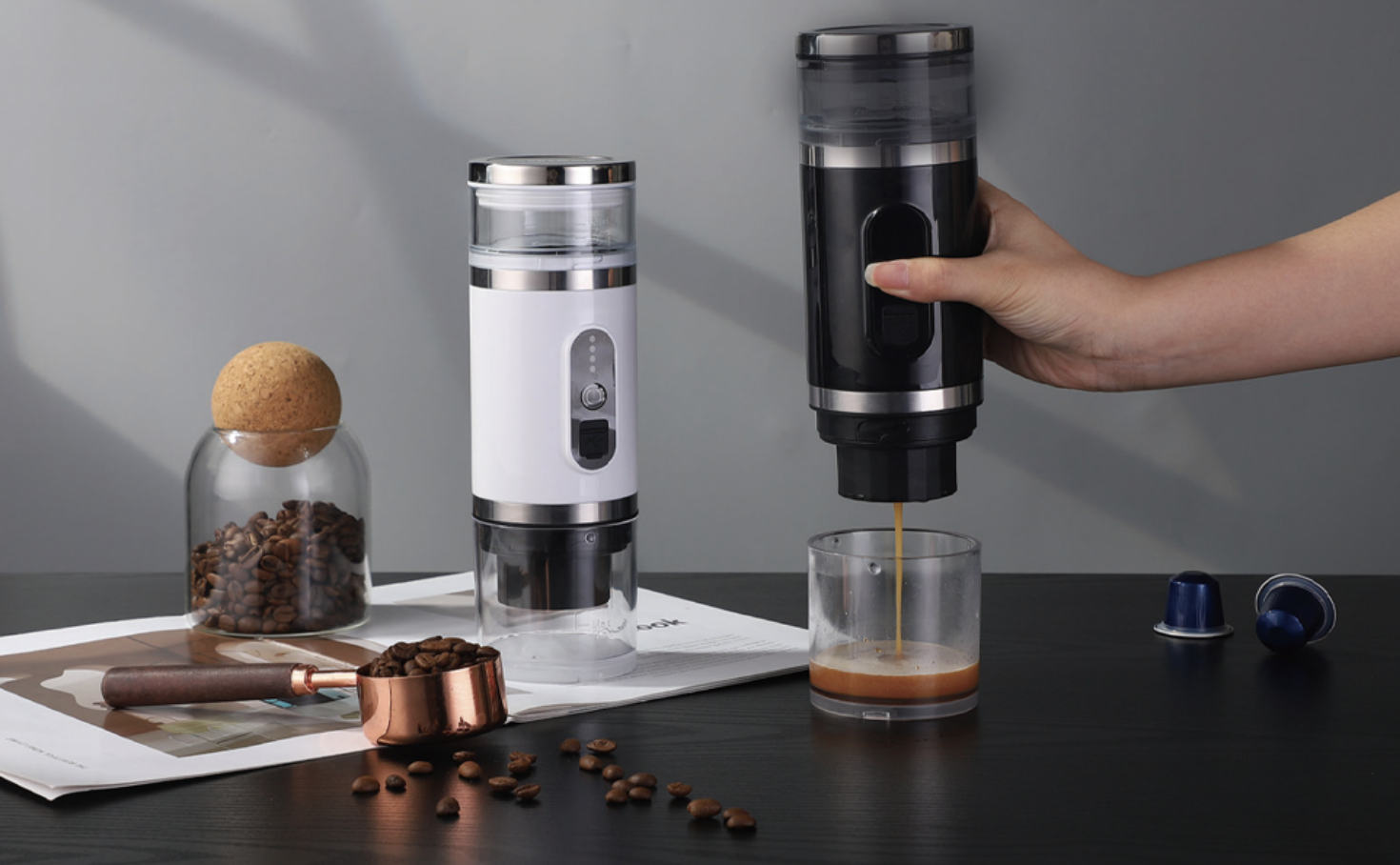
To contextualize how these theoretical standards translate into physical product design, one can analyze Blossom’s flagship model: the Automatic Mini Electronic Coffee Bean Grinder with Cable. This appliance serves as an industry case study in compact, high-efficiency kitchen engineering, demonstrating how a manufacturer can pack commercial-grade utility into a portable footprint while maintaining full compliance.
Technical Performance Analysis and Specifications
The design architecture of this electronic grinder prioritizes structural optimization and precise particle distribution. Below are the core technical specifications that define its operational capabilities:
- Form Factor and Portability:Engineered with a space-saving mini profile, making it highly adaptable for compact kitchens, office spaces, and travel scenarios.
- Power Architecture:Equipped with a dedicated wired cable configuration, ensuring a stable, uninterrupted power supply that maintains consistent motor RPM (rotations per minute) under heavy bean loads, avoiding the torque decay often observed in battery-powered alternatives.
- Grind Mechanism:Utilizes high-density, wear-resistant conical burrs designed to minimize heat generation during operation, preserving the delicate volatile oils and aromatic compounds of the coffee bean.
- Control Interface:Features an automated electronic shut-off system linked to a precision timer, allowing users to select their desired grind duration for consistent repeatable results.
- Material Composition:Constructed with an impact-resistant outer shell and a food-grade stainless steel grinding assembly that fully satisfies international health and safety directives.
From an engineering perspective, maintaining stable torque within a mini housing requires efficient thermal dissipation. The internal layout of this model incorporates designated airflow paths that redirect heat away from the motor and the grinding chamber. This structural choice directly aids in achieving CE compliance by preventing surface temperatures from exceeding safety thresholds. Concurrently, the internal control PCB (Printed Circuit Board) is enclosed in an electromagnetic shielding compartment, a design choice directly mandated to fulfill FCC Part 15 regulations regarding radiofrequency emissions.
Conclusion: Setting the Benchmark for Modern Kitchenware Manufacturing
The modern marketplace leaves little room for compromise. As consumers become more educated regarding extraction variables, their expectations for the underlying hardware continue to rise. A certified manufacturer does not view regulatory testing as a bureaucratic hurdle, but rather as an essential methodology for refining product architecture.
By systematically applying CE and FCC criteria to its research and manufacturing pipelines, JinHua Blossom Co., Ltd. demonstrates how technical rigor and a consumer-centric mission can coexist. The resulting product portfolio provides international distributors and domestic brewers with appliances that deliver precise, reliable performance year after year. As home brewing continues to evolve globally, the definition of a premier manufacturer will remain anchored to this unwavering standard of certified engineering excellence.
For comprehensive product catalogs, technical documentation, and partnership inquiries, please visit the official corporate portal at https://www.zjblossom.com
Source :jinhua blossom science & technology co., ltd
This article was originally published by IssueWire. Read the original article here.
