
How Can Precision-Engineered Tools Shorten the Textile Production Life Cycle?



(YorkPedia Editorial):- Hangzhou, Zhejiang May 6, 2026 (Issuewire.com) – Understanding the Textile Production Life Cycle
The textile production life cycle encompasses the entire journey of a product from initial design and material selection to pattern nesting, cutting, sewing, and final distribution. Traditionally, the “cutting” phase has been a notorious bottleneck. Manual cutting or utilizing outdated mechanical systems often results in significant material waste, inconsistent accuracy, and a heavy reliance on skilled labor–all of which extend the production timeline and increase operational costs. In this context, a pivotal question arises: Can precision-engineered tools shorten the textile production life cycle? For a Certified Specialized Textile Cutting Tool Exporter, the answer lies in the integration of automated cutting precision and intelligent workflow management.
Shortening this cycle is not merely about increasing the speed of a blade. It requires a holistic optimization of the transition from digital design to physical output. By minimizing the “idle time” between these stages and ensuring first-time-right accuracy, manufacturers can drastically compress the interval between a concept and a finished product.
The Role of Intelligent Cutting in Time Compression
To achieve a shortened production cycle, precision-engineered tools address three core pillars: automation, accuracy, and adaptability. Advanced digital cutting systems, such as those developed by IECHO, utilize sophisticated software to interpret CAD designs instantly, eliminating the need for physical templates.
One of the primary ways these tools shorten the life cycle is through automated nesting. High-performance algorithms calculate the most efficient layout for patterns on a fabric roll within seconds. This process not only saves time compared to manual layout but also reduces material consumption by up to 10% to 15%. When materials are utilized more efficiently, the supply chain for raw materials becomes less strained, contributing to a leaner production flow.
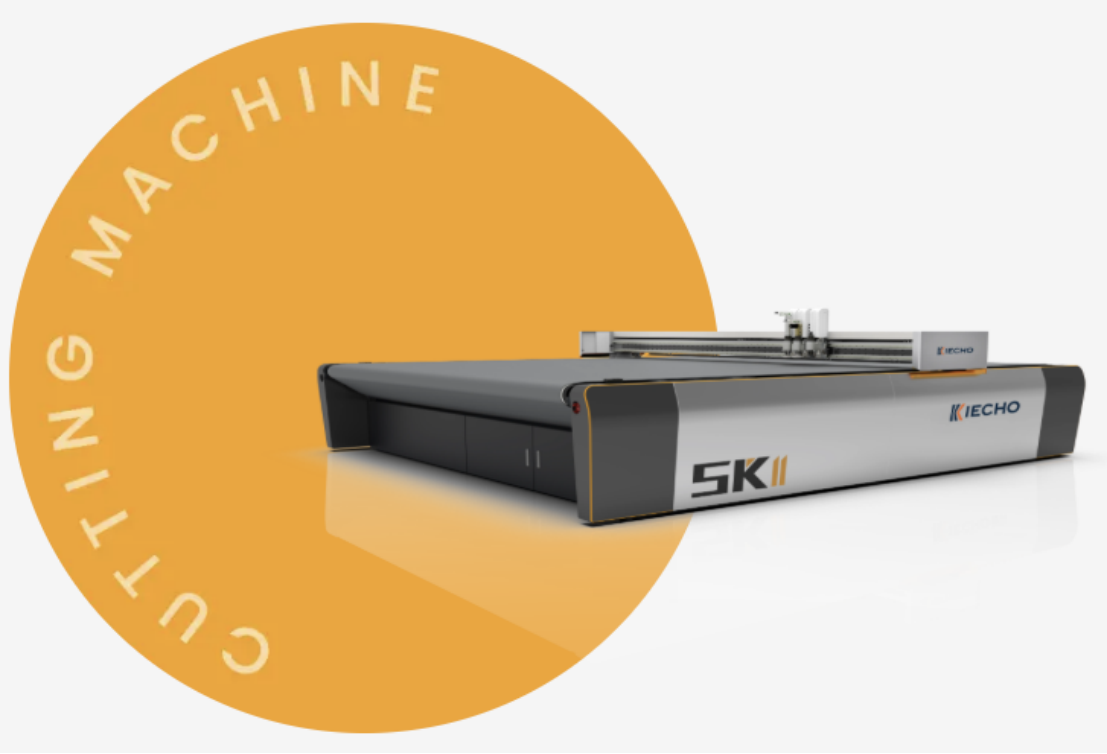
Technical Excellence: The SK2 High-Precision Multi-Industry Flexible Material Cutting System
A technical analysis of modern precision tools reveals why they are superior to traditional methods. For instance, the SK2 Cutting System exemplifies the convergence of linear motor drive technology and digital intelligence. This system is designed to handle diversified multi-industry applications, utilizing a heavy-duty integrated frame and advanced motion control to include automotive interiors, outdoor equipment, and high-end composite industrial textiles.
The technical parameters of such systems are engineered for high-intensity environments. By adopting the industry-leading linear motor drive, which replaces traditional rack and pinion for faster response, the SK2 ensures that even complex geometric shapes are executed with extreme accuracy and higher acceleration. This level of accuracy is vital for shortening the life cycle because it virtually eliminates the need for secondary trimming or recutting due to errors–steps that traditionally add days to a production schedule.
Furthermore, the SK2’s modular design and multi-head configuration–such as the Electric Oscillating Tool (EOT) for soft materials and specialized tools for various flexible textiles–allows a single machine to transition between different types seamlessly. This versatility reduces the “changeover time” in a factory, allowing for a continuous production flow even when switching between different client orders with its “infinite” length potential in specialized configurations.
Innovation in Material Handling and Workflow
Shortening the production cycle also involves the physical movement of textiles. Precision-engineered systems like the SK2 often incorporate automatic feeding and conveyor belts that synchronize with the cutting speed. This creates a “continuous cutting” environment where the material is moved, scanned for defects via high-definition vision systems, and cut in one fluid motion.
By identifying fabric defects in real-time and automatically adjusting the nesting pattern to avoid them, these tools prevent the production of defective parts. In a traditional setup, a defect might only be noticed during the sewing or quality control stage, necessitating a restart of the entire cutting process for that specific batch. The SK2 system’s intelligent workflow ensures you “fail fast” or, better yet, “correct early,” keeping the life cycle moving forward without regression.
Strategic Advantages and Quality Compliance
For enterprises seeking to compete on a global scale, the adoption of these precision tools provides a clear competitive edge. Beyond speed, the output meets stringent international quality standards, a necessity for exporters dealing with high-end markets in North America and Europe. Systems that are CE and ISO certified ensure that the machinery operates safely and consistently, reducing downtime caused by mechanical failure or regulatory non-compliance.
The integration of such technology also addresses the labor shortage in the manufacturing sector. By shifting from labor-intensive manual processes to technology-driven operations, manufacturers can maintain high output levels with a leaner workforce, focusing human talent on creative design and strategic management rather than repetitive physical tasks.
Conclusion
Precision-engineered tools are no longer an optional upgrade for textile manufacturers; they are a fundamental requirement for navigating the modern market. By optimizing material usage, ensuring extreme accuracy, and automating the workflow from digital file to cut part, these systems effectively shorten the production life cycle. This efficiency allows brands to respond to trends faster, reduce environmental impact through waste reduction, and maintain the high-level technical standards required in today’s industrial landscape.
For more information on digital cutting solutions and technical specifications, please visit the official website: https://www.iechocutter.com/
This article was originally published by IssueWire. Read the original article here.
