
Analyzing the Growth of China Leading Smart Meter Lithium Battery Manufacturers Ahead of Enlit-Europe 2026


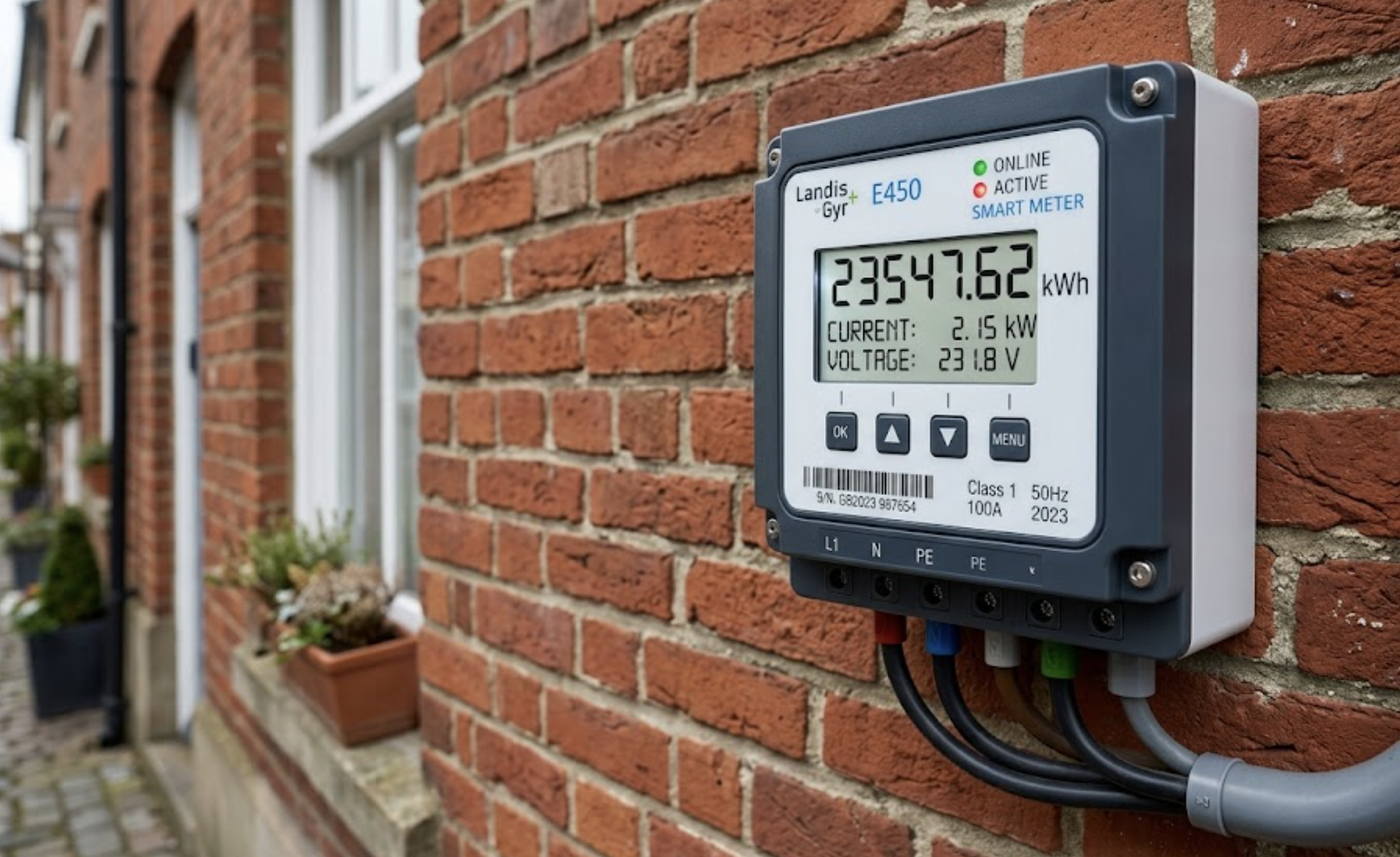
(YorkPedia Editorial):- Shenzhen, Guangdong Jun 25, 2026 (Issuewire.com) – The European Union’s push toward a decentralized, carbon-neutral energy economy isn’t slowing down — if anything, the regulatory pressure is intensifying. Member states are overhauling legacy municipal infrastructure at scale, building out smart grids that depend on accurate consumption data from thousands of digital endpoints: electricity, gas, and water meters spread across cities, suburbs, and rural networks alike. As the industry converges on Milan for Enlit Europe 2026, the conversation around hardware reliability has sharpened considerably. At the center of that conversation is power. These remote devices need to run autonomously for up to fifteen years, and the battery inside each one is the component that either holds the whole system together or quietly becomes the reason for an expensive service call. European procurement teams have taken notice, and many are now looking specifically to China Leading Smart Meter Lithium Battery Manufacturers to supply primary cells that can meet those operational timelines without intervention.
LPWAN protocols — NB-IoT, LoRaWAN, Sigfox — are what make the real-time data layer possible, but they come with an energy cost that older metering architectures never had to account for. These systems don’t draw power smoothly; they sit dormant, then wake abruptly to push data across long distances, sometimes through significant signal attenuation. Smart water meters installed in buried concrete pits are a good example of the challenge: the RF transceiver has to work harder to reach the network, which means higher instantaneous current draw from an already stressed power source. As utilities move toward more frequent data logging intervals to support dynamic pricing, that strain compounds over time.
The financial logic here is straightforward. If an embedded cell degrades ahead of schedule, the maintenance cost of reaching it — excavating a pit, replacing a meter, re-commissioning the endpoint — typically far exceeds whatever was saved on the original component. Grid operators also face penalties for data transmission gaps, so there’s regulatory exposure on top of the operational cost. Taken together, these pressures have shifted procurement thinking away from unit price and toward long-term asset security. The battery isn’t a consumable; it’s infrastructure.
Economies of Scale and Supply Chain Integration: The Structural Edge of China Battery Manufacturers
Chinese primary lithium manufacturers have built a structural advantage that’s difficult to replicate elsewhere. Deep vertical integration — covering raw material purification through to finished multi-cell pack assembly — gives these facilities a level of control over material consistency and production timing that more fragmented supply chains simply can’t match. When lithium, manganese dioxide, and thionyl chloride are sourced, processed, and assembled within a coordinated industrial ecosystem, the chemical stability of each production lot becomes far more predictable. For European procurement teams managing multi-year deployment contracts, that predictability has real value.
Automation is the other pillar of this model. Fully automated electrode alignment and electrolyte filling — handled with micro-milligram precision — removes the batch-to-batch variation that human-managed assembly introduces. The practical outcome is that millions of units can exhibit near-identical internal resistance profiles, which matters enormously when you’re rolling out across a national grid. A utility provider can model expected performance with confidence because the hardware is genuinely consistent, not just nominally so.
Quality assurance runs throughout the process rather than being applied at the end. Raw materials go through spectrographic testing before touching the assembly floor. Computer vision systems inspect mechanical seals and weld integrity in real time, pulling any cell that deviates from tolerance before it moves forward. For European grid installations — which represent capital commitments measured in decades, not quarters — this manufacturing discipline is part of what makes the supplier relationship viable in the first place.
Exhibition Preview: Unveiling PKCELL Advanced Li-MnO2 and Primary Power Solutions
Enlit Europe 2026 is shaping up to be a significant moment for primary power technology, and PKCell (Shenzhen Pkcell Battery Co., Ltd.) will be presenting its latest developments in utility power configurations at the event. One area drawing particular attention from the engineering side is Lithium Manganese Dioxide (Li-MnO2) chemistry — a solid-cathode system that’s gaining traction in smart water and electricity meter applications where safety margins and thermal stability are priorities.
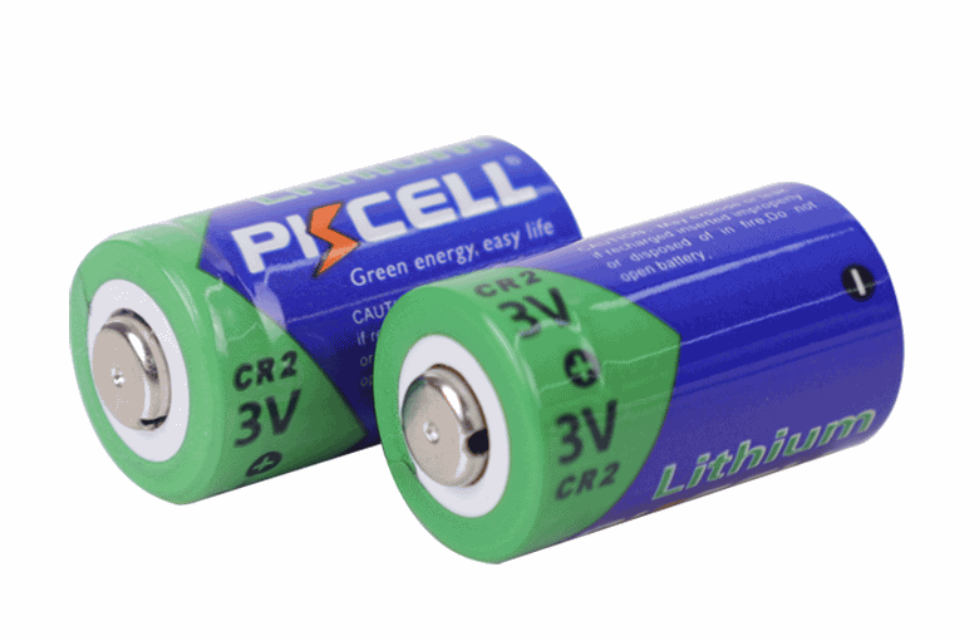
A concrete example of this is the 3V CR2 Lithium Manganese Dioxide battery — also designated CR15H270 — which delivers a nominal capacity of 850mAh to 1000mAh in a compact form factor. One of its more practically useful characteristics is the absence of the passivation problem that affects thionyl chloride systems. Li-MnO2 chemistry doesn’t develop the thick internal crystalline barrier that causes voltage delay when a device wakes from sleep mode. When an IoT endpoint activates to transmit, the cell responds immediately — no transient dip, no controller reset, no lost data packet.
The spiral-wound internal structure of the CR2 cell is what enables the high peak current support. Maximizing electrode surface area within the cell housing allows it to handle pulse demands without structural degradation over time. PKCell’s electrolyte formulation also incorporates chemical stabilizers that suppress gas generation and extend storage stability — relevant for deployments where cells may sit in inventory for extended periods before installation. The operating temperature range is broad enough to cover the full span of European field conditions, from winter installations in Scandinavia to summer heat exposure in southern European above-ground enclosures.
Strategic Engineering Partnerships: How PKCELL Empowers European Utility Localization
Standard catalog components rarely fit every metering application cleanly. European meter developers frequently work with enclosure designs, connector specifications, and circuit protection requirements that don’t map onto off-the-shelf battery configurations. PKCell’s OEM and ODM engineering services exist specifically to bridge that gap. Technical teams work directly with customer engineering groups to design multi-cell primary packs with tailored wiring harnesses, application-specific connectors, and ruggedized outer casings suited to the target installation environment. Protective circuitry — safety diodes, custom fuses — can be integrated to guard against external short circuits or reverse polarity events in the field.
Regulatory compliance is handled at the manufacturing level rather than being left to the buyer. PKCell certifies its utility battery portfolio under CE, RoHS, and REACH standards, confirming the absence of hazardous substances and banned heavy metals. That alignment with Europe’s circular economy framework matters both at the point of sale and at end of life, where recycling obligations are increasingly scrutinized by municipal operators. UN38.3 transport certification covers the logistics chain, keeping cross-border shipments moving without the customs complications that non-certified goods routinely generate.
The relationship doesn’t end at shipment. PKCell provides hardware-in-the-loop simulation testing to validate battery performance against modeled multi-year utility load profiles. European utility providers can verify expected asset lifespan before committing to full-scale field deployment — a safeguard that’s become increasingly standard for major grid procurement decisions. As Enlit Europe 2026 approaches, this combination of manufacturing depth, engineering flexibility, and compliance infrastructure positions PKCell as a substantive long-term partner for utilities navigating the practical demands of grid modernization.
Corporate Website: https://www.pkcellpower.com/.
Media Contact
Shenzhen Pkcell Battery Co., Ltd.
902, Tower B, Hongrongyuan North Station Center, North Station Community, Minzhi Street, Longhua District, Shenzhen, China
This article was originally published by IssueWire. Read the original article here.
