
How High Quality Smart Meter Lithium Battery Manufacturers Are Accelerating AMI Rollouts Across Asia and Europe


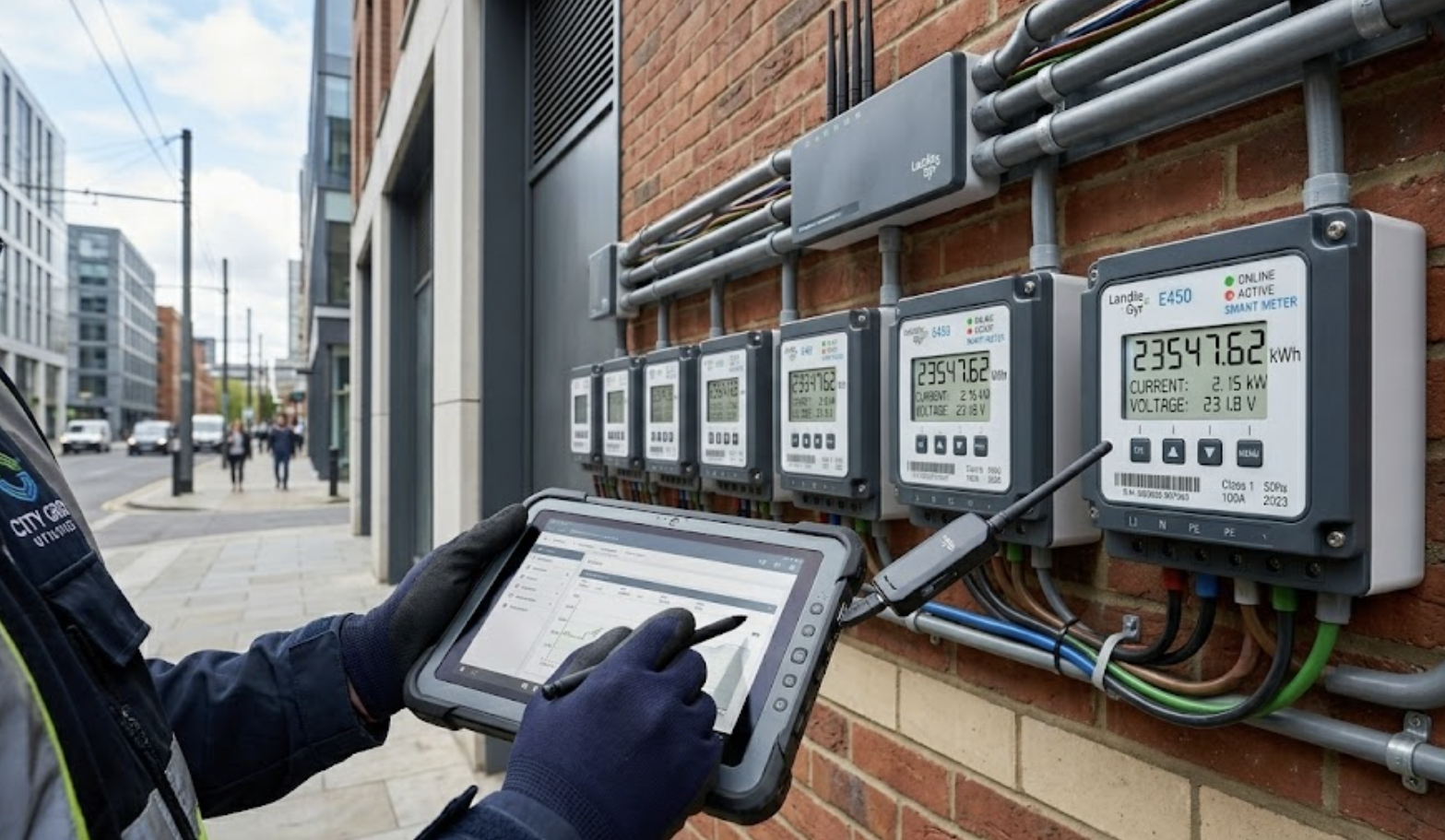
(YorkPedia Editorial):- Shenzhen, Guangdong Jun 25, 2026 (Issuewire.com) – Advanced Metering Infrastructure rollouts are among the most capital-intensive projects a utility network will undertake. Across Asia and Europe, grid operators are launching modernization programs at scale — replacing legacy systems with digital endpoints that record and transmit consumption data continuously, without human intervention. What makes these projects financially precarious is the dependency on remote hardware that needs to keep working, unsupervised, for ten to fifteen years. A single weak link in the power supply chain can unravel years of planning. That’s why procurement teams working on large AMI deployments have become increasingly deliberate about which High Quality Smart Meter Lithium Battery Manufacturers they bring into the supply chain — and why.
The failure mode that asset managers worry about most is what the industry calls infant mortality: a cell that degrades prematurely under field conditions, triggering an emergency replacement before the meter has delivered any meaningful return. For devices installed in deep-pit water meter vaults or along remote gas pipelines, that replacement isn’t a simple swap. It requires specialized personnel, equipment access, and scheduling coordination — costs that weren’t in the original capital expenditure model and that can delay projected ROI by years. Evaluating batteries on unit price alone consistently underestimates this exposure. Total cost of ownership, over the full deployment lifespan, is the more honest metric.
There’s also the data continuity problem. When a battery fails mid-deployment, the utility loses real-time visibility into local consumption. That gap disrupts load forecasting, complicates dynamic pricing, and creates billing discrepancies that generate customer complaints and administrative overhead. Grid operators running large geographic service territories can’t absorb those disruptions across multiple endpoints simultaneously. The implication is clear: power components need to be selected not just for initial performance, but for chemical endurance and discharge predictability across the full operational window.
Engineering Zero-Defect Supply Chains: The Technical Pillars of High-Yield Battery Manufacturing
Consistent performance across a large-volume shipment doesn’t happen by accident. It requires manufacturing discipline built into every stage of production, not applied as a final inspection step. ISO 9001 quality management frameworks provide the structural backbone here — systematic documentation of cleanroom conditions, raw material purity, and chemical composition keeps electrochemical parameters from drifting across batches. When a utility provider receives a shipment of tens of thousands of cells and needs them to behave identically in the field, that upstream process control is what makes it possible.
Automated assembly has also changed what’s achievable in high-volume primary cell production. Laser welding systems handle cell-to-pack assembly with micro-millimetric precision, eliminating the cold joints and variable contact resistance that manual soldering introduces. Over a fifteen-year field lifetime, those minor inconsistencies can become structural failures — internal circuit fractures caused by physical vibration or thermal cycling. Laser micro-welding removes that variable. End-of-line testing closes the loop: 100% automated inspection of open-circuit voltage, load-bearing capacity, and internal resistance profiles means manufacturing anomalies get caught before the product leaves the factory, not after it’s been installed underground.
Seal integrity is another area where automated manufacturing has raised the bar. Moisture ingress into a primary lithium cell accelerates internal chemical breakdown and self-discharge — a failure mode that may not show up for months after installation, by which point replacement is the only option. Computerized vision arrays inspect cell perimeters and seal geometries at production speed, flagging any unit with even minor structural irregularities for immediate rejection. It’s a level of scrutiny that human inspection at scale simply can’t replicate consistently.
Real-World Power Resilience: Scaling Critical Grids with PKCELL ER34615+HPC1520 Architectures
Heavy-duty telemetry networks — the kind running across dense urban grids or remote rural infrastructure — put specific demands on battery architecture that standard primary cells weren’t designed to meet alone. NB-IoT and LoRaWAN transmissions require periodic high-current bursts that can stress a conventional lithium cell significantly, particularly if passivation has built up during a long idle period. PKCell (Shenzhen Pkcell Battery Co., Ltd.) addresses this through a hybrid configuration that’s become a reference design for demanding utility applications.
The 3.6V ER34615+HPC1520 Battery Pack at 19,000mAh pairs a D-size bobbin-type Lithium Thionyl Chloride primary cell with a Hybrid Pulse Capacitor. The logic behind the pairing is straightforward: the primary ER cell handles long-term energy storage, while the HPC1520 acts as a high-speed buffer that absorbs pulse demand during active transmissions. When the smart meter fires up its RF transceiver, the capacitor delivers the required multi-ampere burst without drawing that current directly through the primary cell. This protects the core chemistry from repeated electrical stress and eliminates the voltage delay that passivation would otherwise cause — a particular concern for meters in cold climates where low temperatures compound the problem.
The 19,000mAh nominal capacity gives meter designers meaningful headroom. Self-discharge stays below 1% annually, so batteries can sit in inventory or experience logistics delays without meaningfully compromising the energy reserve available at installation. The discharge curve remains flat throughout the operational lifecycle, which simplifies firmware power management — the device can predict remaining capacity reliably rather than compensating for a declining voltage profile. Hermetic glass-to-metal sealing prevents electrolyte leakage across the thermal range that field conditions in Europe and Asia actually produce, from freezing winter installations to humid tropical deployments.
Mitigating Infrastructure Risk: Why PKCELL is the Strategic Velocity Partner for Global Smart Grids
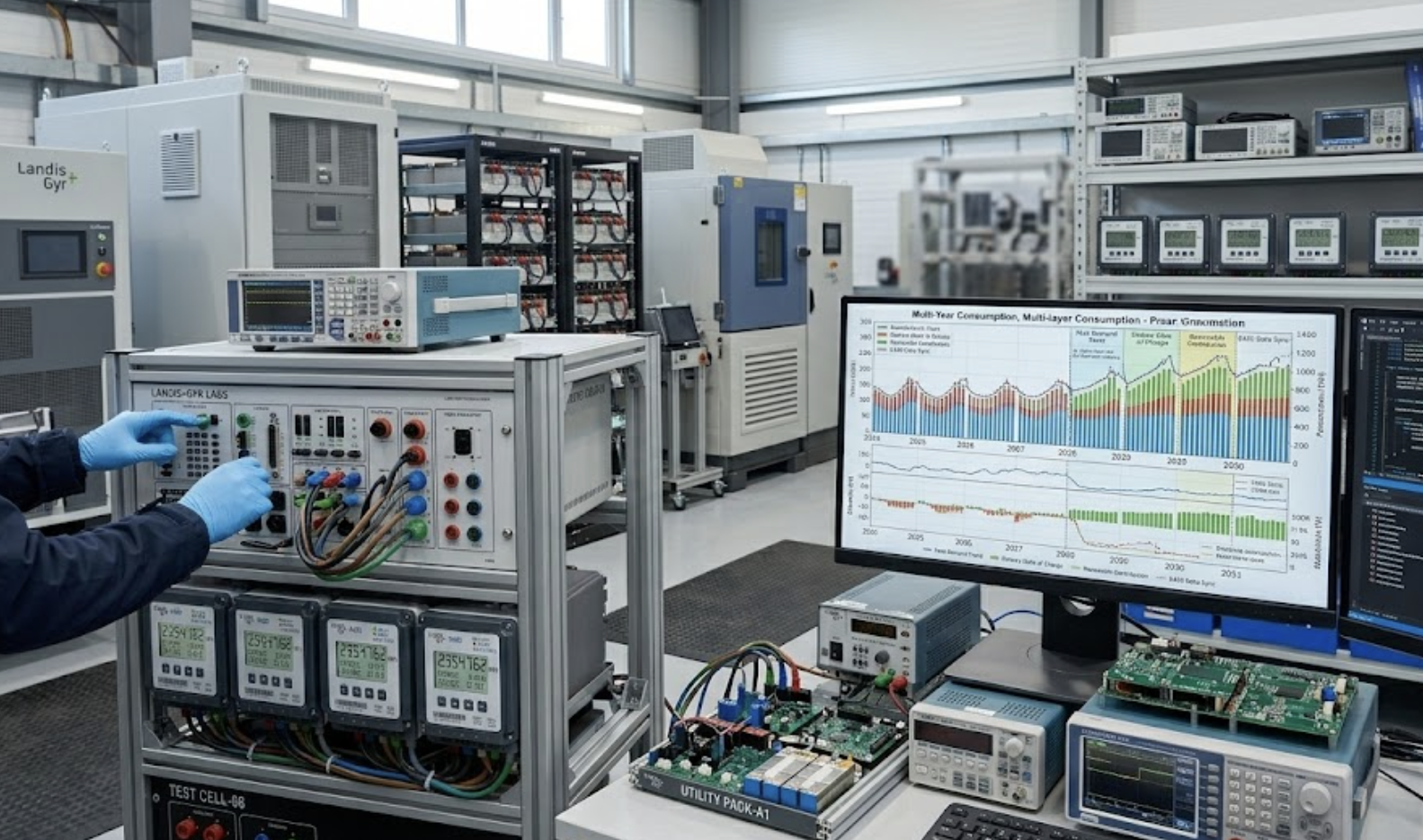
For EPC companies managing large utility consortia, component reliability is only part of the equation. Schedule is the other. A delivery that arrives late — or that requires re-testing because documentation is incomplete — can stall construction timelines and trigger contract penalties. PKCell’s vertically integrated production model is structured around this reality. Rather than functioning purely as a component supplier, the company positions itself as a risk-management partner: one that can run hardware-in-the-loop simulations to validate battery behavior against multi-year utility load profiles before procurement is finalized, giving municipal regulatory bodies the technical evidence they need to approve deployment.
Regulatory compliance is handled comprehensively across the product portfolio. Shenzhen Pkcell Battery Co., Ltd. holds CE, RoHS, REACH, and UN38.3 certifications, which simplifies customs clearance across international trade borders and reduces the administrative friction that can slow down cross-regional deployments. Automated tracking and full technical traceability give procurement managers visibility from factory floor to field installation — useful both for quality assurance and for audit purposes in regulated utility markets.
The broader trend across Asia and Europe is that utilities are becoming more rigorous in how they evaluate power supply partnerships, not less. The combination of long deployment timescales, high replacement costs, and data continuity obligations has made battery selection a strategic decision rather than a procurement afterthought. Manufacturers that can demonstrate zero-defect supply chains, engineering flexibility, and regulatory alignment are the ones finding themselves embedded in infrastructure programs that will run for decades.
Corporate Website: https://www.pkcellpower.com/.
Media Contact
Shenzhen Pkcell Battery Co., Ltd.
902, Tower B, Hongrongyuan North Station Center, North Station Community, Minzhi Street, Longhua District, Shenzhen, China
This article was originally published by IssueWire. Read the original article here.
